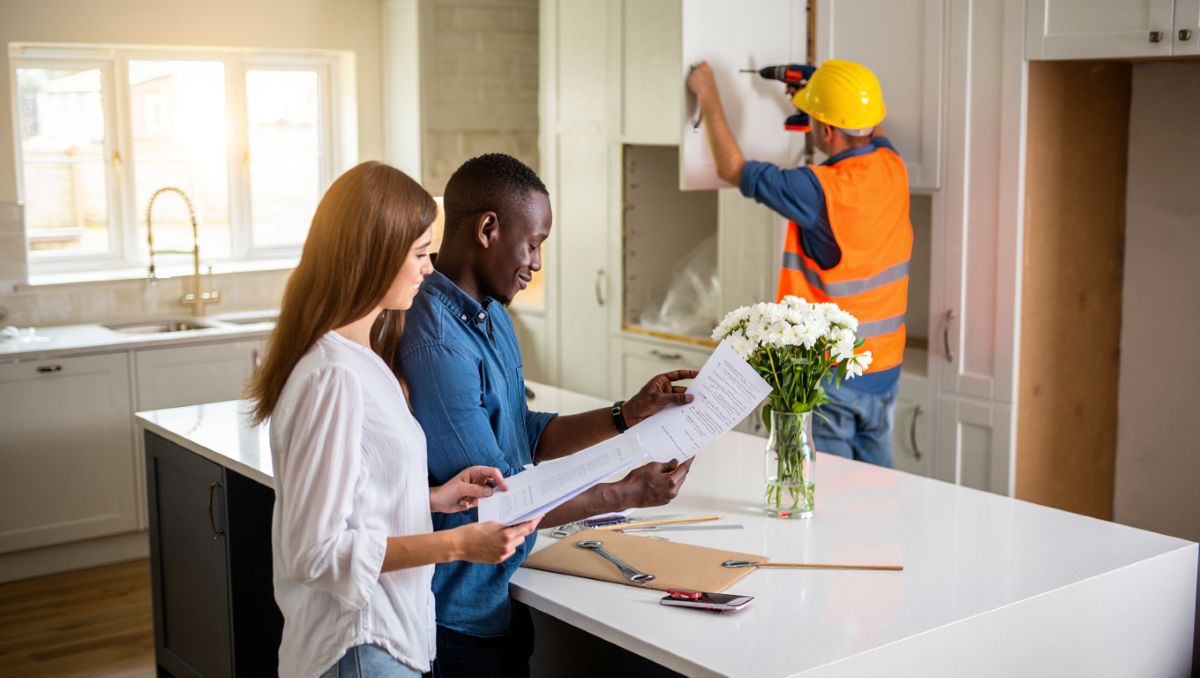
A well-planned bathroom remodel can dramatically improve how your home functions on a daily basis while also adding long-term value. Bathrooms are some of the most frequently used spaces in any house, yet they are often among the smallest. That makes them perfect candidates for smart design thinking rooted in efficiency, durability, and performance. By approaching your remodel with an engineer-focused mindset, you can make thoughtful decisions that maximize space, improve flow, and elevate style without wasting square footage or budget. Below are five smart bathroom remodel ideas that balance form and function, helping you create a space that works harder and looks better for years to come.
1. Optimize the Layout Before Choosing the Finishes
One of the most impactful steps in any bathroom remodel happens before tile samples or fixture finishes ever come into play. Layout optimization is the foundation of a successful project. From an engineering perspective, the goal is to improve circulation, reduce wasted space, and ensure that plumbing and electrical systems are used efficiently.
Start by evaluating how the bathroom is currently used. Are doors swinging into tight areas? Does the vanity block movement? Is the shower footprint larger than necessary, while storage feels limited? Small layout adjustments can yield big results.
Smart layout strategies include:
Replacing a hinged door with a pocket door or sliding barn-style door to free up floor space
Repositioning fixtures to create a more logical flow between sink, toilet, and shower
Aligning plumbing fixtures along shared walls to reduce complexity and cost
Expanding visual space by removing unnecessary partitions or bulky tubs
Engineers and experienced remodelers think in terms of clearances and ergonomics. Proper spacing around fixtures improves comfort and accessibility while also making the room feel larger. A well-optimized layout ensures that every inch of the bathroom serves a purpose.
2. Use Wall-Mounted and Floating Fixtures to Open Up the Room
When floor space is limited, the most effective way to make a bathroom feel larger is to lift elements off the ground. Wall-mounted and floating fixtures are a smart solution that blends modern style with practical benefits.
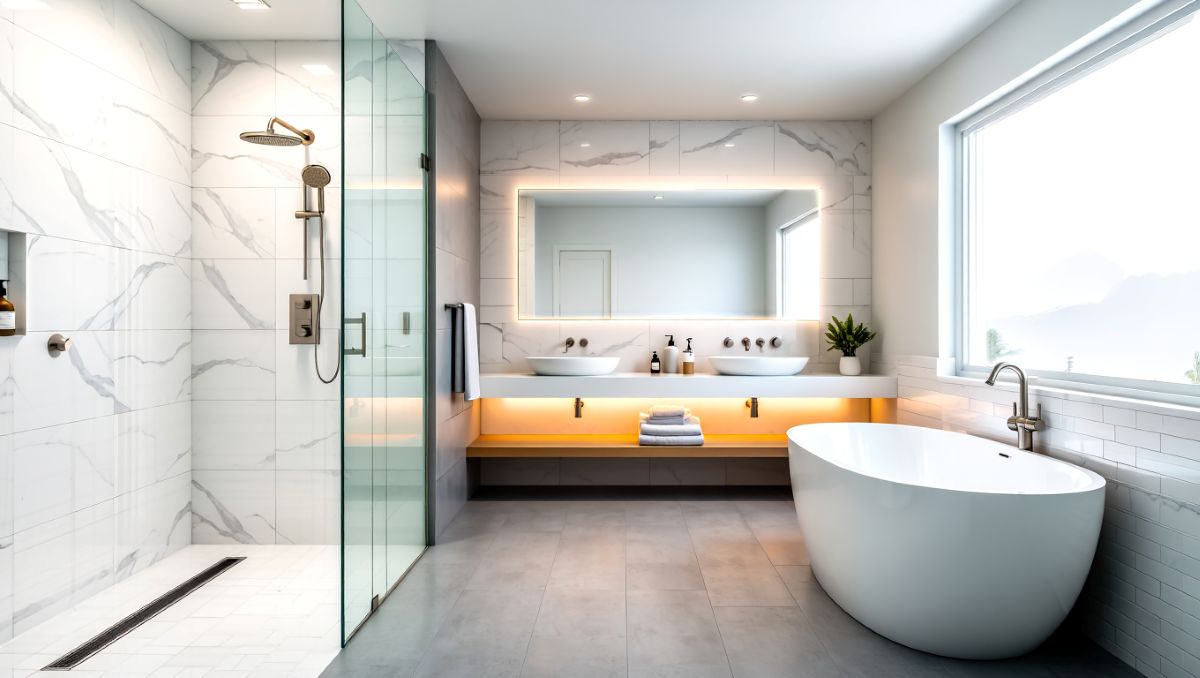
Floating vanities create the illusion of more space by exposing more of the floor. This not only makes the room feel less cramped but also simplifies cleaning and maintenance. Wall-mounted toilets offer similar advantages while allowing flexibility in height placement for comfort and accessibility.
Benefits of wall-mounted fixtures include:
Increased visible floor area, which enhances the perception of space
Easier cleaning with fewer hard-to-reach corners
Customizable installation heights for improved ergonomics
A clean modern aesthetic that works in both contemporary and transitional designs
From an engineering standpoint, these fixtures require proper wall reinforcement and precise installation. When done correctly, they are just as durable and reliable as traditional options while delivering superior spatial efficiency.
3. Build Storage into the Architecture
Clutter is the enemy of both space and style. One of the smartest bathroom remodel ideas is to integrate storage directly into the structure of the room rather than relying on bulky furniture or add-ons. Built-in storage solutions maximize capacity without encroaching on valuable floor space.
Recessed medicine cabinets, wall niches, and custom built-ins take advantage of stud cavities and unused wall depth. This approach keeps essentials organized and accessible while maintaining a streamlined appearance.
Effective built-in storage ideas include:
Recessed medicine cabinets with mirrored fronts for dual functionality
Shower niches for toiletries that eliminate the need for corner caddies
Built-in shelving above toilets or between wall studs
Custom vanity drawers designed for specific items like hair tools or grooming products
Engineers appreciate solutions that work with the existing structure rather than against it. By integrating storage into the walls, you reduce material usage, improve load distribution, and create a cleaner, more efficient space.
4. Choose Materials That Combine Durability with Visual Impact
Style matters, but in a bathroom remodel, performance is just as important. Bathrooms are high-moisture environments that demand materials engineered to withstand humidity, temperature changes, and frequent use. The smartest designs balance aesthetics with long-term durability.
Large-format tiles are a great example. They create a sleek, modern look while reducing the number of grout lines. Fewer grout lines mean less maintenance and better resistance to moisture penetration. Engineered quartz countertops offer similar advantages with consistent strength, low porosity, and design flexibility.
Material choices that maximize space and style include:
Large format wall and floor tiles to create visual continuity
Light colored surfaces that reflect light and make the room feel larger
Slip-resistant flooring engineered for wet environments
Moisture-resistant drywall and backer boards behind tile and fixtures
From an engineering perspective, material selection is about lifecycle performance. Choosing products designed for bathroom conditions reduces the risk of failure, mold growth, and costly repairs down the line.
5. Layer Lighting for Function and Atmosphere
Lighting is often overlooked, yet it plays a critical role in how spacious and stylish a bathroom feels. A single overhead light is rarely sufficient. Smart bathroom remodels use layered lighting to address both functional needs and aesthetic goals.
Task lighting at the vanity ensures proper visibility for grooming. Ambient lighting provides overall illumination. Accent lighting highlights architectural features and adds depth. When these layers work together, the bathroom feels larger, brighter, and more inviting.
Effective lighting strategies include:
LED vanity lights positioned at eye level to reduce shadows
Recessed ceiling lights spaced evenly for consistent coverage
Waterproof LED strips under floating vanities or shelves for a modern glow
Dimmable controls to adjust lighting levels based on time of day or mood
Engineers focus on efficiency and performance. LED lighting offers long life, low energy consumption, and minimal heat output. Proper placement and circuit planning ensure that lighting enhances the space without overloading electrical systems.
Bringing It All Together with a Thoughtful Design Build Approach
The most successful bathroom remodel projects are those that consider space, style, and structure as an integrated system. Layout, fixtures, materials, storage, and lighting all influence one another. When these elements are planned together, the result is a bathroom that feels larger, functions better, and stands the test of time.
A design-build approach allows homeowners to benefit from coordinated planning and execution. Engineers, designers, and builders collaborate to solve problems before construction begins. This reduces surprises, controls costs, and ensures that every decision supports the overall performance of the space.
Smart bathroom remodeling is not about chasing trends. It is about applying proven principles of efficiency, durability, and thoughtful design to create a space that enhances daily life.
Start Your Bathroom Remodel with Evergreen Home Exteriors
If you are ready to transform your bathroom with smart design and expert execution, Evergreen Home Exteriors is here to help. Established more than 20 years ago by founders Jon and Anne Marie, Evergreen has always been a family-first company. Since 1998, we have specialized in all phases of home remodeling, offering full-service design-build solutions that bring remodeling dreams to life.
Evergreen Home Exteriors understands the importance of a safe, comforting, and inspiring home. Improving your family’s space and quality of life is our first priority. With decades of experience and an engineer-focused approach to remodeling, our team delivers results you can trust.
Get started on your project today by contacting us and discover how a smart bathroom remodel can maximize space, style, and long-term value for your home.
Design-build remodeling has become one of the most trusted and efficient ways to upgrade a home, especially for homeowners who value clarity, precision, and well-coordinated execution. Instead of juggling multiple contractors, designers, and consultants, design-build remodeling brings everything together under one streamlined process. From an engineering-minded perspective, this approach reduces variables, minimizes risk, and produces more predictable outcomes. For families investing in their homes, it also creates a smoother, more enjoyable experience from concept through completion.
Home remodeling is not just about aesthetics. It is about improving performance, safety, durability, and long-term value. When design and construction teams collaborate from day one, every decision is informed by real-world feasibility. This alignment is what makes design-build remodeling such a powerful solution for modern home upgrades.
What Is Design-Build Remodeling?
Design-build remodeling is a project delivery method where one company is responsible for both the design and construction phases of a renovation. Instead of hiring a designer first and then bidding the plans out to contractors, homeowners work with a single integrated team.
From an engineering standpoint, this structure improves efficiency by eliminating disconnects between plans and execution. Designers understand construction constraints, and builders are involved early enough to flag potential issues before they become costly problems.
Key characteristics of design-build remodeling include:
A single point of responsibility for the entire project
Collaborative planning between designers, engineers, and builders
Early cost modeling and realistic budgeting
Faster project timelines due to reduced handoffs
Improved quality control and accountability
This approach is especially valuable for complex renovations such as exterior replacements, structural upgrades, and full-home remodels.
Why Traditional Remodeling Often Falls Short
Traditional remodeling typically follows a design-bid-build model. While this method can work, it introduces inefficiencies that engineers often recognize as avoidable system failures.
Common challenges include:
Design plans that are not constructible within budget
Miscommunication between designers and contractors
Change orders caused by overlooked structural constraints
Extended timelines due to redesigns and re-approvals
Finger-pointing when problems arise
Each handoff between separate parties increases the chance of error. In contrast, design-build remodeling functions as a closed-loop system where feedback is continuous, and issues are resolved collaboratively.
The Engineering Advantage of an Integrated Team
From a technical perspective, design-build remodeling mirrors best practices in engineering project management. Cross-functional teams work together early, identify constraints, and optimize solutions before construction begins.
Benefits of this integration include:
Structural feasibility checks during the design phase
Accurate material selection based on real installation conditions
Early energy efficiency and performance modeling
Reduced waste through precise planning and ordering
Safer job sites due to coordinated scheduling and logistics
When designers and builders share responsibility, decisions are driven by data, experience, and practicality rather than assumptions.
A More Predictable Budget and Timeline
One of the biggest concerns homeowners have is cost overruns. Design-build remodeling addresses this by involving construction professionals in the budgeting process from the start.
Instead of estimating costs after designs are complete, the design-build team:
Develops concepts within a defined budget range
Provides real-time cost feedback as designs evolve
Identifies cost-saving alternatives without sacrificing performance
Reduces change orders caused by design conflicts
This results in a more predictable financial outcome and fewer surprises during construction. Timelines also improve because design revisions and construction planning happen concurrently rather than sequentially.
Exterior Remodeling and Performance-Driven Design
Exterior remodeling is one area where design-build remodeling truly shines. Projects such as siding replacement, roofing, window upgrades, and door installations involve both aesthetic and performance considerations.
A design-build team evaluates:
Structural integrity of existing assemblies
Moisture management and drainage pathways
Insulation and thermal performance
Material compatibility and durability
Code compliance and load requirements
By addressing these factors holistically, homeowners get upgrades that not only look great but also protect the home and improve energy efficiency.
Family-Focused Remodeling with Long-Term Value
A home is more than a structure. It is where families gather, rest, and build memories. Design-build remodeling supports this reality by prioritizing thoughtful planning and durable solutions that enhance daily life.
Since 1998, Evergreen Home Exteriors has built its reputation on this family-first philosophy. Established more than 20 years ago by founders Jon and Anne Marie, Evergreen understands that a safe, comforting, and inspiring space directly impacts quality of life. Every design-build project is approached with the mindset that the home must serve both present needs and future goals.
This philosophy translates into:
Designs that balance beauty and function
Materials chosen for longevity and low maintenance
Construction methods that prioritize safety and reliability
Clear communication that keeps families informed and confident
Reducing Stress Through Clear Communication
From an operational standpoint, clear communication is one of the most valuable outputs of design-build remodeling. With one team managing the entire process, homeowners always know who to call and what to expect.
Design-build communication advantages include:
A single project manager coordinating all phases
Unified documentation and decision tracking
Faster responses to questions and changes
Consistent expectations across design and construction
Greater transparency throughout the project lifecycle
This clarity reduces stress and builds trust, allowing homeowners to focus on the excitement of their upgrade rather than the logistics.
Customization Without Complication
One misconception about design-build remodeling is that it limits creativity. In reality, it enables more customization because ideas are evaluated in real time for feasibility and cost.
Instead of hearing no after the design is finished, homeowners receive informed guidance throughout the process:
Engineers and builders suggest alternatives that meet the same goals
Designers adapt concepts to existing conditions
Innovative solutions emerge through collaboration
Custom details are engineered for durability and performance
The result is a home upgrade that reflects personal style while meeting structural and functional requirements.
Sustainability and Energy Efficiency Built In
Modern remodeling is increasingly focused on sustainability. Design-build remodeling naturally supports energy-efficient and environmentally responsible solutions because performance is considered from the outset.
Design-build teams can:
Analyze insulation and air sealing opportunities
Recommend high-performance windows and doors
Optimize exterior assemblies for moisture control
Reduce material waste through precise planning
Extend the lifespan of the home through durable upgrades
These improvements lower energy costs, increase comfort, and contribute to long-term environmental responsibility.
Why Experience Matters in Design-Build Remodeling
Design-build remodeling requires a deep understanding of both design principles and construction realities. Experience allows teams to anticipate challenges and engineer solutions before problems arise.
Evergreen Home Exteriors has ramped up its services over decades to specialize in all phases of home remodeling. As a full-service home renovation business, Evergreen focuses on a wide range of design-build services that bring remodeling dreams to life while maintaining structural integrity and performance standards.
This experience ensures:
Accurate assessments of existing conditions
Code-compliant and structurally sound designs
High-quality craftsmanship at every stage
Projects that stand the test of time
The Seamless Path from Vision to Completion
At its core, design-build remodeling is about alignment. Vision, engineering, and execution move forward together, creating a seamless path from initial idea to finished project.
Homeowners benefit from:
Fewer delays and redesigns
Better control over costs
Higher quality outcomes
A collaborative and transparent process
For families upgrading their homes, this approach delivers both peace of mind and lasting value.
Start Your Design-Build Remodeling Project with Confidence
If you are considering a home upgrade and want a process that is efficient, technically sound, and family-focused, design-build remodeling offers a proven solution. Evergreen Home Exteriors combines decades of experience with a commitment to engineering-driven quality and personal service.
Since 1998, Evergreen has helped homeowners create safer, more beautiful, and more functional spaces that support everyday life. From exterior upgrades to full-scale renovations, our design-build approach ensures every detail is planned, engineered, and executed with care.
Get started on your project today by contacting us and discover how a seamless design-build remodeling experience can transform your home and enhance your quality of life.
A kitchen remodel is one of the most exciting and technically complex upgrades you can make to your home. It is where structure, systems, and design intersect in a space that must perform flawlessly every day. Choosing the right kitchen remodel contractor is the single most important decision you will make during this process. The contractor you hire will influence everything from structural integrity and code compliance to workflow efficiency, material performance, and long-term durability. For homeowners who want their dream kitchen to be beautiful, safe, and engineered to last, understanding how to evaluate and select the right professional is essential.
Why the Right Kitchen Remodel Contractor Matters
A kitchen remodel is not just about cabinets and countertops. It often involves electrical load calculations, plumbing reroutes, ventilation design, structural modifications, and detailed sequencing of trades. A qualified contractor understands how these systems work together and how to execute them with precision. When the wrong contractor is chosen, homeowners may face issues such as failed inspections, poor airflow, uneven surfaces, water damage, or premature wear of materials.
The right contractor approaches your kitchen as a system, not a collection of finishes. This mindset ensures that every design choice is supported by sound construction practices and that the finished space performs as well as it looks.
Understanding the Scope of a Kitchen Remodel
Before hiring a contractor, it is important to understand what a kitchen remodel can involve from an engineering and construction standpoint. A professional kitchen remodel contractor will typically manage the following components:
Structural changes such as removing or modifying walls
Electrical upgrades for appliances, lighting, and outlets
Plumbing adjustments for sinks, dishwashers, and gas lines
Ventilation and HVAC considerations
Cabinetry installation with proper load support
Countertop fabrication and installation
Flooring transitions and subfloor preparation
Code compliance and permitting
Each of these elements must be carefully coordinated. An experienced contractor plans the sequence of work to avoid conflicts and costly rework while ensuring safety and efficiency at every stage.
Design Build Versus Traditional Contracting
One of the first decisions you will encounter is whether to work with a design-build contractor or a traditional contractor. A design-build firm handles both the design and construction phases under one roof. This approach offers several technical advantages.
With design-build, engineers, designers, and builders collaborate from the beginning. This reduces the risk of designs that look good on paper but are difficult or expensive to build. It also allows for early identification of structural or mechanical constraints and more accurate budgeting.
Traditional contracting often separates design and construction. While this can work in some cases, it may lead to miscommunication, change orders, and delays if the design does not fully account for existing conditions.
For homeowners seeking a streamlined and technically sound process, a design-build kitchen remodel contractor is often the preferred choice.
Key Qualifications to Look For
Not all contractors are equally equipped to handle the complexity of a kitchen remodel. When evaluating potential contractors, focus on qualifications that demonstrate technical competence and reliability.
Important qualifications include:
Proper licensing and insurance
Proven experience with kitchen remodels specifically
Knowledge of local building codes and permitting processes
Established relationships with skilled subcontractors
A portfolio of completed projects with a similar scope
Clear and detailed proposals
Ask questions about how the contractor approaches structural changes, manages electrical loads, and ensures proper ventilation. A knowledgeable contractor will be comfortable discussing these topics in detail.
The Importance of Planning and Pre-Construction Analysis
A successful kitchen remodel begins long before demolition starts. The planning phase is where engineering principles play a critical role. A professional contractor conducts a thorough evaluation of your existing kitchen, including measurements, structural assessment, and system capacity.
During this phase, the contractor should:
Verify wall types and load-bearing elements
Assess electrical panel capacity and circuit requirements
Evaluate plumbing layout and water pressure
Review ventilation options and duct routing
Identify potential conflicts or constraints
This analysis allows the contractor to develop a realistic plan that minimizes surprises during construction. It also ensures that design decisions are grounded in what is structurally and mechanically feasible.
Materials and Performance Considerations
An engineer-focused contractor looks beyond aesthetics when recommending materials. The kitchen is a high-stress environment with heat, moisture, and frequent use. Material selection should account for performance characteristics such as durability, thermal resistance, and ease of maintenance.
Examples of performance-driven considerations include:
Cabinet construction methods and load ratings
Countertop material resistance to heat and impact
Flooring slip resistance and moisture tolerance
Proper backing and fastening for heavy fixtures
Sealants and finishes appropriate for kitchen conditions
A knowledgeable contractor explains why certain materials are recommended and how they contribute to the longevity and safety of your kitchen.
Communication and Project Management
Clear communication is a technical requirement as much as a personal one. A kitchen remodel involves many moving parts, and miscommunication can lead to errors and delays. The right contractor establishes structured communication channels and provides regular updates.
Effective project management includes:
Detailed project schedules
Clear documentation of changes
Coordination of trades and inspections
Quality control checkpoints
Transparent budgeting and invoicing
Ask potential contractors how they track progress and handle unexpected issues. A systematic approach indicates a higher level of professionalism and engineering discipline.
Budgeting With Accuracy and Transparency
Kitchen remodel costs can vary widely depending on scope and materials. A professional contractor provides a detailed estimate that breaks down costs by category. This level of detail helps homeowners understand where their investment is going and allows for informed decisions.
An accurate budget should account for:
Labor and subcontractor costs
Materials and fixtures
Permits and inspections
Contingencies for unforeseen conditions
Project management overhead
Be cautious of estimates that seem unusually low. In many cases, these omit critical components or underestimate labor, leading to cost overruns later.
Safety and Code Compliance
Safety is a non-negotiable aspect of any remodel. Kitchens involve electrical systems, gas lines, and heavy components, all of which must meet strict codes. The right contractor prioritizes safety for both workers and occupants.
Key safety and compliance practices include:
Pulling required permits
Scheduling inspections at appropriate stages
Using proper protective equipment
Following manufacturer installation guidelines
Ensuring all work meets or exceeds code requirements
A contractor who cuts corners on permits or inspections puts your home and investment at risk.
Evaluating Past Work and References
One of the most reliable ways to assess a contractor is by reviewing past projects and speaking with previous clients. Look for kitchens that demonstrate attention to detail, clean installations, and thoughtful layouts.
When checking references, ask questions such as:
Was the project completed on schedule
How were issues handled when they arose
Was communication clear and consistent
Has the kitchen performed well over time
Consistent positive feedback is a strong indicator of a contractor who delivers both technical quality and customer satisfaction.
Long-Term Value and Warranty Support
A kitchen remodel is a long-term investment. The right contractor stands behind their work with warranties and ongoing support. This reflects confidence in their craftsmanship and materials.
Ask about:
Workmanship warranties
Manufacturer warranties on products
Post-project support and follow-up
Maintenance recommendations
A contractor who plans for the long term is more likely to build with durability and performance in mind.
Choosing a Contractor Who Aligns with Your Values
Beyond technical skills, it is important to work with a contractor whose values align with yours. Home remodeling is a personal process that affects your daily life. A family-focused company understands the importance of minimizing disruption and creating a space that supports how you live.
A contractor who listens, respects your home, and prioritizes your comfort contributes significantly to a positive remodeling experience.
Why Evergreen Home Exteriors Is a Trusted Choice
Evergreen Home Exteriors has been serving homeowners since 1998 with a commitment to quality, integrity, and family-first values. Established more than 20 years ago by founders Jon and Anne Marie, Evergreen understands that a home is more than a structure. It is where life happens.
As a full-service home renovation business, Evergreen specializes in all phases of home remodeling with a design-build approach that integrates planning, engineering, and craftsmanship. Our team focuses on creating safe, comforting, and inspiring spaces that improve both the function and quality of life for families.
With decades of experience and a dedication to doing things the right way, Evergreen Home Exteriors brings the expertise needed to turn complex remodeling projects into successful outcomes.
Start Building Your Dream Kitchen Today
Hiring the right kitchen remodel contractor is the foundation of a successful renovation. By choosing a professional who values engineering principles, clear communication, and long-term performance, you protect your investment and ensure your dream kitchen delivers for years to come.
If you are ready to get started on your kitchen remodel, contact us today. Our experienced team is ready to help bring your remodeling dreams to life with thoughtful design, precise execution, and a family-first approach. Schedule your consultation and take the first step toward a kitchen built for how you live.
A kitchen remodel is one of the most rewarding home improvement projects you can take on, but it is also one of the most financially complex. Cabinets, countertops, appliances, plumbing, electrical work, and finishes all add up quickly. Many homeowners delay or downsize their plans because they are unsure how to pay for it responsibly. Understanding how to finance a kitchen remodel is just as important as choosing the right layout or materials, because a well-planned budget keeps the project efficient, stress-free, and aligned with your long term financial goals. With the right strategy and a practical, engineering-minded approach, you can transform your kitchen without putting unnecessary strain on your household finances.
Start With a Clear Scope and Cost Breakdown
Before looking at financing options, you need a clear understanding of what you are building. From an engineering perspective, cost control starts with defining the scope. Vague goals lead to budget creep, while precise specifications lead to predictable outcomes.
Begin by identifying the functional goals of your kitchen remodel. Are you improving workflow, adding storage, upgrading outdated systems, or increasing resale value? Each objective affects cost differently.
A thorough cost breakdown typically includes:
Design and planning fees
Demolition and disposal
Structural changes if walls are moved
Electrical and plumbing upgrades
Cabinets and hardware
Countertops and backsplash
Flooring
Appliances
Labor and project management
Permit fees and inspections
Contingency buffer for unforeseen issues
From a technical standpoint, a contingency of 10 to 15 percent is not optional. Older homes, especially, may reveal hidden issues once demolition begins. Planning for these variables prevents financing shortfalls mid-project.
Set a Realistic Budget Using Data, Not Emotion
Many homeowners budget based on inspirational photos or national averages without accounting for local labor rates or the condition of their existing kitchen. A more reliable method is to use real data from professional estimates and align it with your financial capacity.
Engineers rely on constraints to guide decisions, and your budget should function the same way. Establish a maximum project cost that does not compromise your emergency savings or monthly cash flow. Then work backward to prioritize features that deliver the most functional value per dollar.
For example:
Soft-close cabinets may improve longevity and usability
Improved lighting design increases efficiency and safety
Upgrading electrical capacity supports modern appliances and future needs
When your budget is grounded in function and durability, financing becomes a tool rather than a risk.
Pay With Cash When Possible and Strategic
Paying with cash is the simplest financing method and eliminates interest costs entirely. However, draining savings for a remodel can create financial vulnerability. The key is to use cash strategically rather than emotionally.
Cash may be best applied to:
Design and planning fees
Early project phases, such as demolition
Portions of the project that do not qualify for financing
From a risk management perspective, it is wise to maintain an emergency fund equal to three to six months of expenses, even after paying for part of the remodel in cash. If using cash means eliminating that buffer, a financing option may actually be the safer choice.
Consider Home Equity Loans and HELOCs
Home equity-based financing is one of the most popular and cost-effective ways to fund a kitchen remodel. These options leverage the value you have already built in your home.
A home equity loan provides a lump sum with a fixed interest rate and predictable monthly payments. This is ideal if your project cost is well defined and you prefer payment stability.
A home equity line of credit, often called a HELOC, functions more like a credit card with a revolving balance. You draw funds as needed and pay interest only on what you use.
Key engineering style considerations include:
Interest rates are typically lower than unsecured loans
Interest may be tax-deductible depending on current tax laws
Your home is used as collateral, increasing risk if payments are missed
HELOC rates are often variable, introducing long-term uncertainty
If your remodel involves phased work or potential design changes, a HELOC offers flexibility. If your design is finalized and fixed, a home equity loan provides predictability.
Explore Contractor Financing Programs
Many full-service remodeling companies offer financing options through trusted lending partners. These programs are designed specifically for home improvement projects and often streamline approval and payment.
Advantages of contractor financing include:
Faster approval compared to traditional bank loans
Bundled project and financing coordination
Promotional offers such as deferred interest periods
Single point of accountability for budget and scope
From a systems integration perspective, contractor financing reduces friction between design, construction, and payment. This can significantly reduce delays and change orders caused by funding gaps.
Always review interest rates, repayment terms, and penalties carefully. Deferred interest plans can be useful, but only if the balance is paid off within the promotional window.
Use Personal Loans for Smaller or Partial Remodels
Personal loans are unsecured loans that can be used for nearly any purpose. They are typically faster to obtain but carry higher interest rates than home equity options.
Personal loans may be appropriate if:
Your remodel is modest in scope
You lack sufficient home equity
You want to avoid using your home as collateral
You need quick access to funds
From a cost efficiency standpoint, personal loans should be used for shorter repayment periods. Long-term financing at high interest rates reduces the overall value of the remodel.
Leverage Credit Cards Carefully and Intentionally
Credit cards are not ideal for financing an entire kitchen remodel, but they can be useful tools when used with precision.
Potential strategic uses include:
Purchasing appliances with cash back or reward points
Covering short-term expenses with a zero percent introductory APR
Managing small overruns while awaiting loan disbursement
Engineers manage risk by limiting exposure. The same principle applies here. Never carry large balances on high-interest cards without a clear payoff plan. Always track utilization to avoid credit score impacts.
Phase the Remodel to Reduce Financial Load
If budget constraints are tight, phasing the remodel can make the project more manageable. This approach spreads costs over time and allows you to finance smaller portions sequentially.
Common phasing strategies include:
Structural and system upgrades first
Cabinets and countertops second
Appliances and finishes last
From a construction sequencing standpoint, this method requires careful planning to avoid rework. A design-build firm can help ensure that early phases are compatible with later upgrades.
Factor in Return on Investment and Long-Term Value
A kitchen remodel is not just an expense. It is an investment in functionality, energy efficiency, and home value. According to industry data, kitchens often deliver one of the highest returns on investment among remodeling projects.
Engineering-focused improvements that increase value include:
Energy-efficient appliances
Improved insulation and ventilation
Durable materials with long service life
Modern electrical and plumbing systems
When evaluating financing options, consider how long you plan to stay in the home. If the remodel improves resale value or reduces operating costs, financing at a reasonable interest rate may be justified.
Avoid Common Financing Mistakes
Many remodeling budgets fail not because of cost, but because of planning errors. Avoid these common pitfalls to keep your project financially sound.
Mistakes to avoid:
Underestimating total project cost
Ignoring permit and inspection fees
Choosing financing without understanding variable rates
Overextending monthly payment obligations
Failing to include a contingency reserve
A disciplined approach to financing mirrors good engineering practice. Anticipate failure points, plan redundancies, and verify assumptions before execution.
Work With a Design Build Partner Who Understands Budget Engineering
One of the most effective ways to control financing is to work with a full-service remodeling company that integrates design, construction, and budgeting from the start. This reduces miscommunication and aligns the project with real-world constraints.
A design-build team evaluates:
Structural feasibility
Material performance
Installation complexity
Long-term maintenance costs
Budget impact of design decisions
When these variables are considered together, financing becomes predictable rather than reactive.
Partner with Us Today
Learning how to finance a kitchen remodel does not require sacrificing quality or peace of mind. It requires a methodical approach that balances cash flow, risk, and long-term value. By defining scope clearly, selecting the right financing tools, and working with experienced professionals, you can achieve a high-performing kitchen that supports your lifestyle without breaking the bank.
If you are ready to take the next step, Evergreen Home Exteriors is here to help. Established more than 20 years ago by founders Jon and Anne Marie, Evergreen has always been a family-first company. Since 1998, Evergreen has specialized in all phases of home remodeling, offering full-service design-build solutions focused on quality, safety, and long-term value. Our experienced team understands the technical and financial aspects of remodeling and will help guide your project from concept to completion with clarity and care. Contact us to get started on your kitchen remodeling project today and turn your vision into a space your family will enjoy for years to come.
A kitchen remodel is one of the most exciting upgrades you can make to your home, but it is also one of the most technically complex and financially significant. From structural considerations and mechanical systems to cabinetry tolerances and appliance loads, a kitchen renovation is a true engineering project inside your home. The good news is that kitchen remodel financing makes it possible to move forward without putting your entire savings on hold. With the right plan, you can design a kitchen that is safer, more efficient, and better suited to how your family lives today, while spreading costs in a responsible and strategic way.
At Evergreen Home Exteriors, we believe smart financing is part of smart design. Since 1998, our family-first, engineer-minded approach to remodeling has helped homeowners turn big ideas into well-executed projects that improve comfort, performance, and long-term value. Below, we break down the most common kitchen remodel financing options, how they work, and how to choose the right kitchen remodel financing to meet your financial goals.
Why Financing a Kitchen Remodel Makes Sense
A modern kitchen remodel involves far more than surface-level changes. Electrical upgrades, plumbing reroutes, structural modifications, ventilation improvements, and code compliance all factor into the final scope. Financing allows homeowners to:
Complete the project correctly the first time instead of cutting corners
Invest in durable materials and efficient systems with longer lifespans
Preserve cash reserves for emergencies or other priorities
Align monthly payments with the long-term value added to the home
From an engineering perspective, phased or underfunded remodels often lead to inefficiencies, rework, or future failures. Financing supports a holistic design-build approach where all systems work together.
Home Equity Loans for Kitchen Remodels
A home equity loan is one of the most popular ways to fund a kitchen remodel, especially for homeowners with significant equity. This option provides a lump sum that is repaid over a fixed term with a fixed interest rate.
How It Works
Home equity loans are secured by the value of your home. The amount you can borrow is based on the difference between your home’s market value and your remaining mortgage balance.
Pros
Predictable monthly payments
Typically lower interest rates than unsecured loans
Suitable for large, well-defined remodel budgets
Cons
Requires sufficient home equity
Uses your home as collateral
Less flexible if project scope changes mid-build
This option works well for engineered kitchen remodels with a clear plan, finalized drawings, and a fixed construction timeline.
Home Equity Lines of Credit (HELOCs)
A HELOC offers more flexibility than a home equity loan and is often favored for remodels that may evolve as walls are opened and systems are evaluated.
How It Works
A HELOC functions like a credit line secured by your home. You can draw funds as needed during the draw period and only pay interest on what you use.
Pros
Flexible access to funds
Lower initial payments during the draw phase
Ideal for phased or design-build projects
Cons
Variable interest rates
Requires strong financial discipline
Risk of rising payments over time
From an engineering standpoint, HELOCs are useful when unforeseen structural or mechanical updates arise during demolition and inspection.
Cash-Out Refinancing
Cash-out refinancing replaces your existing mortgage with a new, larger loan and gives you the difference in cash to use for your remodel.
How It Works
You refinance your mortgage at current rates, take out additional funds, and roll the remodel cost into your monthly mortgage payment.
Pros
Often lower interest rates than other financing options
Single monthly payment
Can improve long-term financial efficiency
Cons
Closing costs can be significant
Extends mortgage term
Depends on favorable market rates
This option is best when interest rates are competitive, and the kitchen remodel is part of a broader home improvement strategy.
Contractor Financing Programs
Many full-service remodelers offer in-house or partnered financing solutions designed specifically for renovation projects.
How It Works
Contractor financing is typically arranged through third-party lenders and may include promotional periods, deferred payments, or streamlined approval processes.
Pros
Convenient and fast approval
Designed around remodeling timelines
Often minimal upfront costs
Cons
Higher interest rates after promotional periods
Less flexibility compared to traditional loans
Requires careful review of terms
For homeowners who value speed and simplicity, contractor financing can keep the project moving without delays in material ordering or labor scheduling.
Personal Loans for Kitchen Remodeling
Personal loans are unsecured and do not require home equity, making them accessible to a wider range of homeowners.
Pros
Fast funding
No collateral required
Simple application process
Cons
Higher interest rates
Shorter repayment terms
Lower borrowing limits
Personal loans are better suited for partial kitchen updates, appliance upgrades, or supplemental funding rather than full-scale remodels involving structural work.
Credit Cards for Limited Remodel Costs
Credit cards can play a role in kitchen remodel financing, but they should be used carefully and strategically.
Best Uses
Appliances
Fixtures
Short-term expenses paid off quickly
Risks
High interest rates
Easy to overspend
Not suitable for large construction costs
From a technical planning perspective, credit cards should never be the primary funding source for system-level kitchen upgrades.
Government Loans and Specialized Programs
Some homeowners may qualify for government-backed or specialized financing programs.
Examples
FHA Title I home improvement loans
Energy efficiency financing for upgraded appliances or lighting
Local or state renovation assistance programs
These programs can be beneficial for kitchens that include energy-saving systems, improved ventilation, or accessibility upgrades.
Choosing the Right Financing Option
Selecting the right kitchen remodel financing option requires balancing financial structure with project engineering. Consider the following factors:
Total project cost including contingencies
Length of time you plan to stay in the home
Stability of interest rates
Flexibility needed during construction
Impact on long-term home value
A well-designed kitchen remodel is an investment in daily function, safety, and efficiency. Financing should support those goals rather than restrict them.
Why a Design-Build Partner Matters
Financing decisions are easier and more effective when paired with a design-build contractor who understands both construction engineering and budget planning. Since 1998, Evergreen Home Exteriors has specialized in all phases of home remodeling, offering homeowners a single, coordinated team from concept to completion.
As a family-first company founded by Jon and Anne Marie more than 20 years ago, Evergreen understands that a kitchen is more than a workspace. It is a hub for family life, connection, and comfort. Our full-service approach ensures that design choices, material selections, and construction methods align with your financing strategy and long-term goals.
Making Your Kitchen Upgrade Possible
A kitchen remodel does not have to be delayed by upfront costs. With thoughtful planning and the right kitchen remodel financing option, you can move forward confidently, knowing your project is engineered for durability, efficiency, and everyday enjoyment. Financing allows you to focus on doing the job right, upgrading critical systems, and creating a kitchen that truly supports how your family lives.
If you are ready to explore your kitchen remodeling options with a team that values craftsmanship, engineering precision, and family-focused service, now is the time to get started. Contact us today to schedule your consultation and take the first step toward a safer, more inspiring kitchen designed to last.