

Is Stamped Concrete Cheaper Than Pavers?
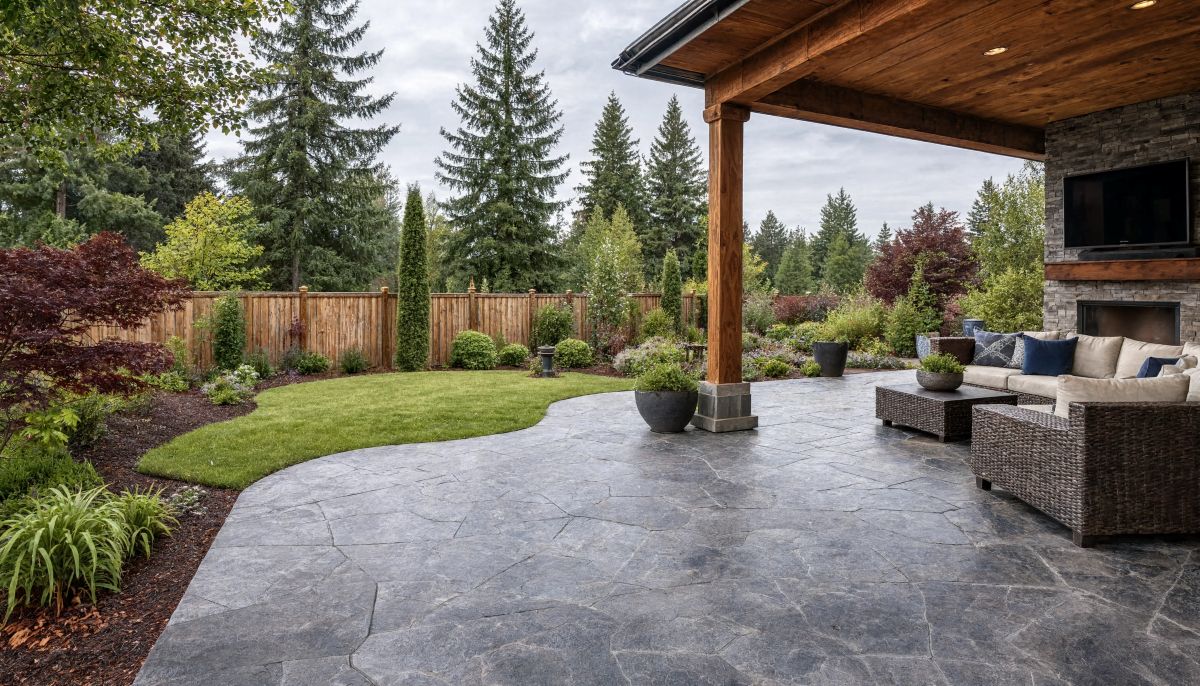
If you are planning a new patio, walkway, pool deck, or outdoor living area, one of the first questions you may ask is: Is stamped concrete cheaper than pavers? In many cases, stamped concrete has a lower initial installation cost than individual concrete, brick, or natural stone pavers. However, the most affordable choice over the life of the project depends on more than the price per square foot. Site preparation, drainage, design complexity, maintenance, repairs, climate exposure, and expected service life all affect the final cost. For Washington homeowners, it is especially important to consider moisture, freeze-thaw cycles, soil movement, and proper water management before choosing a surface.
The Basic Cost Difference Between Stamped Concrete and Pavers
Stamped concrete is generally poured as one continuous slab. Before the concrete fully cures, installers press textured mats into the surface to create the appearance of stone, brick, slate, wood, or another material. Color may be incorporated into the concrete mix, applied to the surface, or added through a combination of methods.
Pavers are manufactured as separate units and installed individually over a prepared base. Depending on the project, they may be made from concrete, clay brick, porcelain, or natural stone. The installation process usually requires excavation, compacted aggregate, bedding material, edge restraints, joint filling, and careful alignment.
Because stamped concrete can cover a large area in a relatively efficient pour, it often costs less upfront than a comparable paver installation. Pavers require more individual placement and can involve greater labor demands. Natural stone pavers may also carry significantly higher material costs.
Still, a lower starting price does not automatically make stamped concrete the best value. The full answer depends on the design, site, and long-term expectations.
Why Stamped Concrete Often Costs Less Upfront
Stamped concrete combines structural concrete and decorative finishing into one installation process. Once the site is excavated, formed, reinforced, and prepared, the crew can pour the slab and apply the decorative pattern before the concrete sets.
This process may reduce installation time compared with placing hundreds or thousands of individual pavers. It also avoids the need to purchase separate paving units for the entire surface. The savings can be especially noticeable on broad, relatively simple areas such as rectangular patios or straight walkways.
Several factors commonly make stamped concrete more economical at the beginning of a project:
- Faster coverage of large areas
- Fewer individual materials to place
- Lower material costs than many natural stone products
- Efficient installation for simple shapes
- Decorative appearance without purchasing premium masonry units
However, stamped concrete is still a skilled installation. Proper finishing requires timing, coordination, and experience. The crew must place, color, stamp, and protect the concrete within a limited working window. Complex borders, multiple colors, detailed patterns, or difficult access can increase labor and narrow the cost difference.
When Pavers May Offer Better Long-Term Value
Pavers often have a higher upfront cost, but they provide a major advantage when repairs are needed. Because the surface consists of individual units, a contractor can typically remove and replace damaged pavers without rebuilding the entire area.
For example, if underground plumbing or drainage work requires access beneath a paver patio, the affected units may be lifted, stored, and reinstalled after the work is complete. If a few pavers become stained or damaged, only those pieces may need replacement.
Stamped concrete does not offer the same flexibility. A crack can sometimes be repaired, but the patch may remain visible because matching the original texture and color is difficult. Larger failures may require removing and replacing a section of the slab. Even when the repair is structurally sound, it may not blend perfectly with the surrounding surface.
Pavers may offer better long-term value when:
- The soil is prone to minor movement
- Future access beneath the surface may be necessary
- The homeowner wants easier localized repairs
- Matching replacement units are available
- Long-term appearance is more important than the lowest initial price
The right decision depends on whether you prioritize immediate affordability or repair flexibility over time.
Site Preparation Affects Both Options
A decorative surface is only as reliable as the base beneath it. Whether you choose stamped concrete or pavers, inadequate excavation, poor compaction, or incorrect drainage can lead to settlement and premature damage.
For stamped concrete, the base must support a continuous slab while helping manage moisture and soil movement. Reinforcement, slab thickness, control joints, grading, and drainage details must be planned before the pour begins. Concrete naturally shrinks as it cures, so control joints are used to encourage cracking in planned locations.
Pavers also depend on a stable, well-compacted base. If the base is too thin or unevenly compacted, the pavers may settle, tilt, or separate. Edge restraints are also important because they prevent the field of pavers from gradually spreading outward.
Cutting costs during site preparation can make either material more expensive in the long run. A planning-first contractor will evaluate the soil, slope, water flow, access, and intended use before recommending a surface system.
How Washington Weather Influences the Decision
Washington’s climate varies by region, but moisture management is important throughout much of the state. Rainwater must be directed away from the home, outdoor structures, and vulnerable edges. In colder areas, freeze-thaw conditions can create additional stress when water enters cracks or poorly drained base materials.
Stamped concrete can perform well when it is correctly designed and installed. The slab should have appropriate thickness, reinforcement, joint placement, slope, and curing protection. Sealing may help reduce moisture penetration and surface wear, although sealers require periodic renewal.
Pavers handle minor ground movement differently because the individual units are not locked into one rigid slab. Small movements may be distributed across joints rather than concentrated into a single visible crack. However, pavers can still shift or settle if the base is poorly prepared or water is allowed to erode supporting materials.
For either option, important climate-related details include:
- Positive drainage away from the home
- Properly compacted base materials
- Water-resistant joint and edge details
- Appropriate slope for runoff
- Materials rated for the local climate
- Maintenance that limits water intrusion
The surface material matters, but water management often has a greater effect on performance than the decorative finish itself.
Design Complexity Can Change the Price Comparison
A simple stamped concrete patio may be noticeably less expensive than a complex paver layout. However, the price difference can shrink as the stamped design becomes more detailed.
Adding multiple integral colors, surface accents, contrasting borders, hand-cut joints, or complex stamp patterns can increase labor. Curved edges and tight access can also make forming and pouring more difficult. If the concrete must be moved by pump or wheelbarrow over a long distance, delivery and labor costs may rise.
Paver pricing also changes with design complexity. Basic concrete pavers arranged in a straightforward pattern are usually more affordable than natural stone units installed in an intricate layout. Curves, small cuts, borders, medallions, and mixed sizes require additional planning and labor.
When comparing quotes, make sure both proposals include comparable design details. A basic stamped slab should not be compared with a premium natural stone paver system as though they were equivalent products. Review the entire scope, including demolition, excavation, base preparation, drainage, reinforcement, edge treatment, sealing, cleanup, and warranties.
Maintenance Requirements for Stamped Concrete
Stamped concrete is relatively easy to clean, but it is not maintenance-free. Dirt, organic debris, algae, moss, deicing products, and standing water can affect the appearance and condition of the surface.
Periodic cleaning helps preserve the finish. Depending on exposure and the sealer used, the surface may also need to be resealed every few years. A sealer can enhance color, reduce staining, and limit moisture penetration, but it must be selected and applied carefully. Some sealers can make wet surfaces slippery, which is an important consideration for pool decks, stairs, and shaded patios.
Common stamped concrete maintenance tasks include:
- Sweeping away leaves and debris
- Washing the surface with appropriate cleaners
- Monitoring control joints and cracks
- Resealing as recommended
- Avoiding harsh chemicals that can damage the finish
- Keeping drainage paths clear
Neglected maintenance can allow the color to fade unevenly or the surface to become stained. Maintenance costs should be included when comparing long-term value.
Maintenance Requirements for Pavers
Pavers also require routine care. Joints may collect weeds, moss, dirt, or organic material, particularly in damp or shaded areas. Joint sand may need to be replenished, and individual units may occasionally require resetting.
Polymeric joint sand can help stabilize joints and reduce weed growth, but it must be installed correctly. Drainage problems should be addressed promptly because flowing water can wash away bedding or joint material. Sealers are optional for many paver systems but may be used to enhance color or improve stain resistance.
Typical paver maintenance may include:
- Sweeping and rinsing the surface
- Removing weeds or moss from joints
- Replacing lost joint material
- Resetting settled or uneven units
- Replacing damaged pavers
- Cleaning stains with material-safe products
Pavers may require more attention at the joints, but localized repairs are generally easier than repairs to a decorative concrete slab.
How Cracking Changes the Cost Equation
Concrete can crack even when it is installed correctly. The goal of proper engineering and workmanship is to manage the risk and control where cracking occurs, not to claim that cracking can be eliminated entirely.
Control joints create intentional weakened lines that encourage the slab to crack in planned locations. Reinforcement helps hold the slab together and control movement, but it does not necessarily prevent all cracks. Soil movement, tree roots, poor drainage, heavy loads, and freeze-thaw exposure can also contribute to cracking.
Pavers do not typically crack across an entire surface in the same way because they are individual pieces. A single paver can still crack, chip, or wear, but replacement is usually straightforward. The flexible nature of the system may make pavers a practical choice on sites where minor settlement is expected.
If a seamless appearance is your main priority, stamped concrete may initially provide the look you prefer. If repairability is more important, pavers may offer greater peace of mind.
Which Option Offers More Design Flexibility?
Both materials provide a wide range of design choices. Stamped concrete can imitate slate, cobblestone, brick, flagstone, wood planks, and other surfaces. It can also be colored to coordinate with siding, masonry, roofing, or landscape features.
Because stamped concrete is poured into forms, it works well for custom curves and large connected surfaces. Borders and accent bands can create visual separation without using separate materials.
Pavers offer extensive options in color, size, texture, pattern, and material. They can be arranged in running bond, basketweave, herringbone, ashlar, or modular layouts. Different paver styles can be combined to create borders, focal points, and transitions between outdoor zones.
Your choice should account for the architecture of the home. A highly decorative surface may look attractive in isolation but feel disconnected from the exterior if the scale, color, and pattern are not coordinated.
Questions to Ask When Comparing Contractor Quotes
A low price is only useful when the scope is complete. Before selecting a contractor, ask what is included in the estimate and how the installation will be built.
Important questions include:
- How much excavation is included?
- What base materials will be used?
- How thick will the base and finished surface be?
- How will drainage be handled?
- What reinforcement is included for stamped concrete?
- Where will control joints be placed?
- What edge restraints are included for pavers?
- Is sealing included?
- How will existing structures and landscaping be protected?
- What cleanup and disposal services are included?
- What workmanship warranty is provided?
Clear answers make it easier to compare proposals accurately. Two contractors may quote the same square footage while planning very different preparation methods and construction details.
Is Stamped Concrete the Right Choice for Your Project?
Stamped concrete may be the right choice if you want a decorative, continuous surface at a generally lower initial cost than premium pavers. It can be especially practical for large patios, walkways, and outdoor entertaining areas with relatively simple layouts.
Pavers may be the better choice if you value individual unit replacement, flexible design options, and easier access for future repairs. They may also be a strong fit for sites with minor soil movement or projects where long-term repairability is a major concern.
Consider the following priorities before deciding:
- Initial project budget
- Desired appearance
- Local soil and drainage conditions
- Maintenance expectations
- Repair preferences
- Expected foot or vehicle traffic
- Accessibility of the work area
- Long-term plans for the property
The best material is not simply the one with the lowest price. It is the system that fits the site, supports the intended use, and can be installed correctly within your budget.
Frequently Asked Questions
Is stamped concrete always cheaper than pavers?
No. Stamped concrete is often less expensive upfront, but complex patterns, multiple colors, difficult access, extensive preparation, and premium finishes can increase the cost. Basic pavers may sometimes be competitively priced.
Which material lasts longer?
Both can last for many years when installed on a properly prepared base. Pavers may be easier to maintain over the long term because damaged units can be replaced individually. Stamped concrete can also be durable, but visible repairs may be more difficult to blend.
Does stamped concrete crack?
Stamped concrete can crack because it is still a concrete slab. Proper base preparation, reinforcement, control joints, drainage, and curing can reduce and manage cracking risks.
Do pavers shift over time?
Pavers can shift or settle if the base is poorly compacted, edge restraints fail, or water erodes supporting materials. Correct installation greatly reduces these problems.
Is stamped concrete slippery when wet?
Some stamped surfaces and sealers can become slippery when wet. Texture, sealer selection, traction additives, slope, and drainage should be considered during design.
Which option is easier to repair?
Pavers are usually easier to repair because individual units can be removed and replaced. Stamped concrete repairs may remain visible due to differences in color, texture, and aging.
Does stamped concrete need to be sealed?
Sealing is commonly recommended to help protect color and reduce staining or moisture penetration. The appropriate schedule depends on the product, exposure, and level of use.
Are pavers better for Washington weather?
Pavers can perform well in Washington because the individual units accommodate minor movement and can be repaired separately. However, stamped concrete can also perform well when drainage, base preparation, reinforcement, jointing, and sealing are handled correctly.
Plan Your Outdoor Surface With Evergreen Home Exteriors
The answer to “Is stamped concrete cheaper than pavers?” is usually yes when comparing initial installation costs, but the right choice should be based on the entire life of the project. Drainage, base preparation, repairability, maintenance, design goals, and Washington weather all deserve careful consideration. A well-planned installation protects your investment by addressing the details below the surface as thoroughly as the finish you see every day.
Evergreen Home Exteriors is a Washington home remodeling contractor focused on planning-first project delivery, including clear scope, clean sequencing, and craftsmanship that looks great up close and performs long-term. We take the time to evaluate how materials, site conditions, water management, and construction details work together before the project begins. Schedule your FREE, no-pressure consultation today.