

Deck Ideas
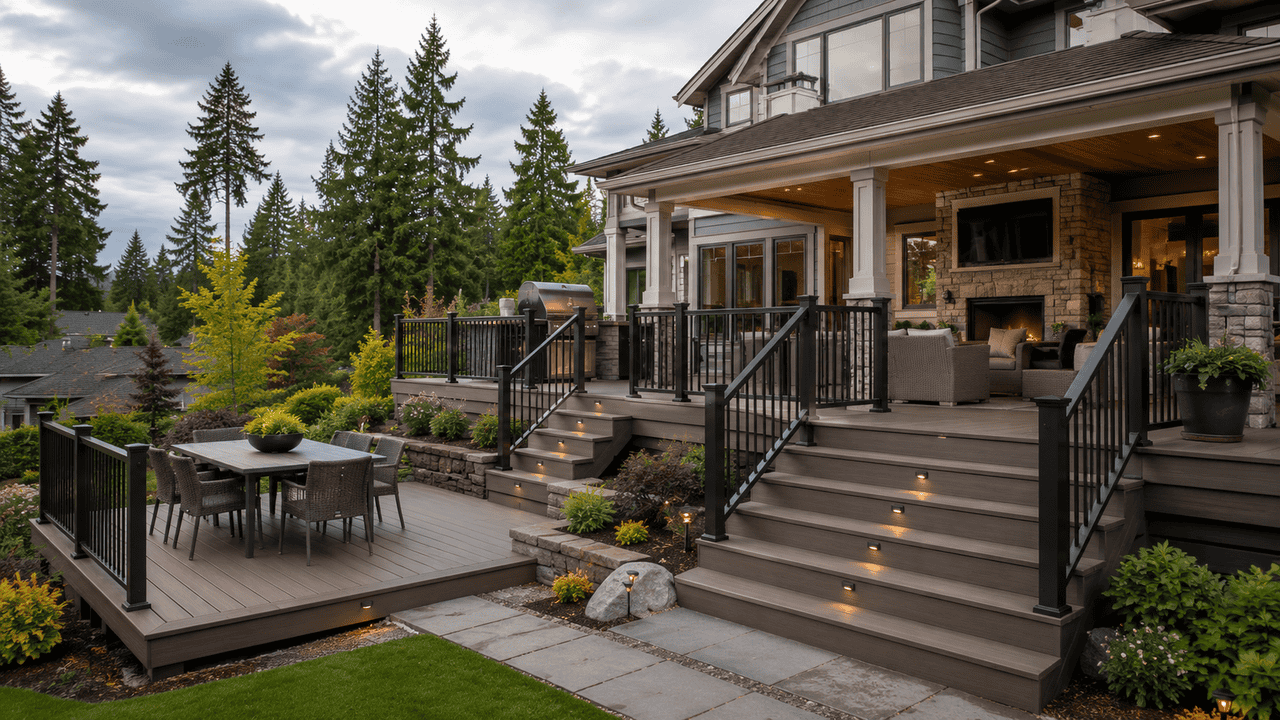
If you are looking for deck ideas that feel inviting, function well, and hold up through Washington’s wet seasons, the best place to start is not with a color board or a furniture layout. It is with a clear plan. A great deck should look beautiful from the yard, feel solid underfoot, shed water properly, connect naturally to the home, and support the way your household actually lives. That balance of beauty, structure, and long-term performance is where smart deck planning makes all the difference.
For many homeowners, the dream starts with a simple thought: “We want more outdoor living space.” From there, the possibilities open up quickly. Maybe you want a low-maintenance composite deck for morning coffee. Maybe you want a covered outdoor room where you can grill even when the forecast is unpredictable. Maybe your current deck is soft, slippery, dated, or poorly laid out, and you want something safer and more attractive. The right deck design should solve practical problems while also making your home feel more complete.
Below are friendly, planning-first deck ideas to help you think through layout, materials, structure, comfort, and craftsmanship before construction begins.
Start With How the Deck Will Be Used
Before choosing boards, rails, lighting, or built-ins, think about how the deck needs to function. An engineer-focused approach begins with use cases. The design should support daily life, not just look good in photos.
Common deck goals include:
- A quiet spot for coffee or reading
- A grilling and outdoor cooking area
- Space for family dinners
- A safer transition from the house to the yard
- Better entertaining flow
- A covered space for year-round use
- A hot tub or spa zone
- A low-maintenance upgrade from an aging wood deck
- A more attractive backyard focal point
Once the primary use is clear, the rest of the design becomes easier to organize. For example, a deck built for dining needs enough clear space around the table so chairs can move without hitting railings. A deck built for grilling needs safe clearance, smart traffic flow, and surface materials that can handle regular use. A deck intended for a hot tub needs structural planning from the beginning because water weight adds a significant load.
Good deck design is not just about square footage. It is about usable square footage.
Create Zones for Better Flow
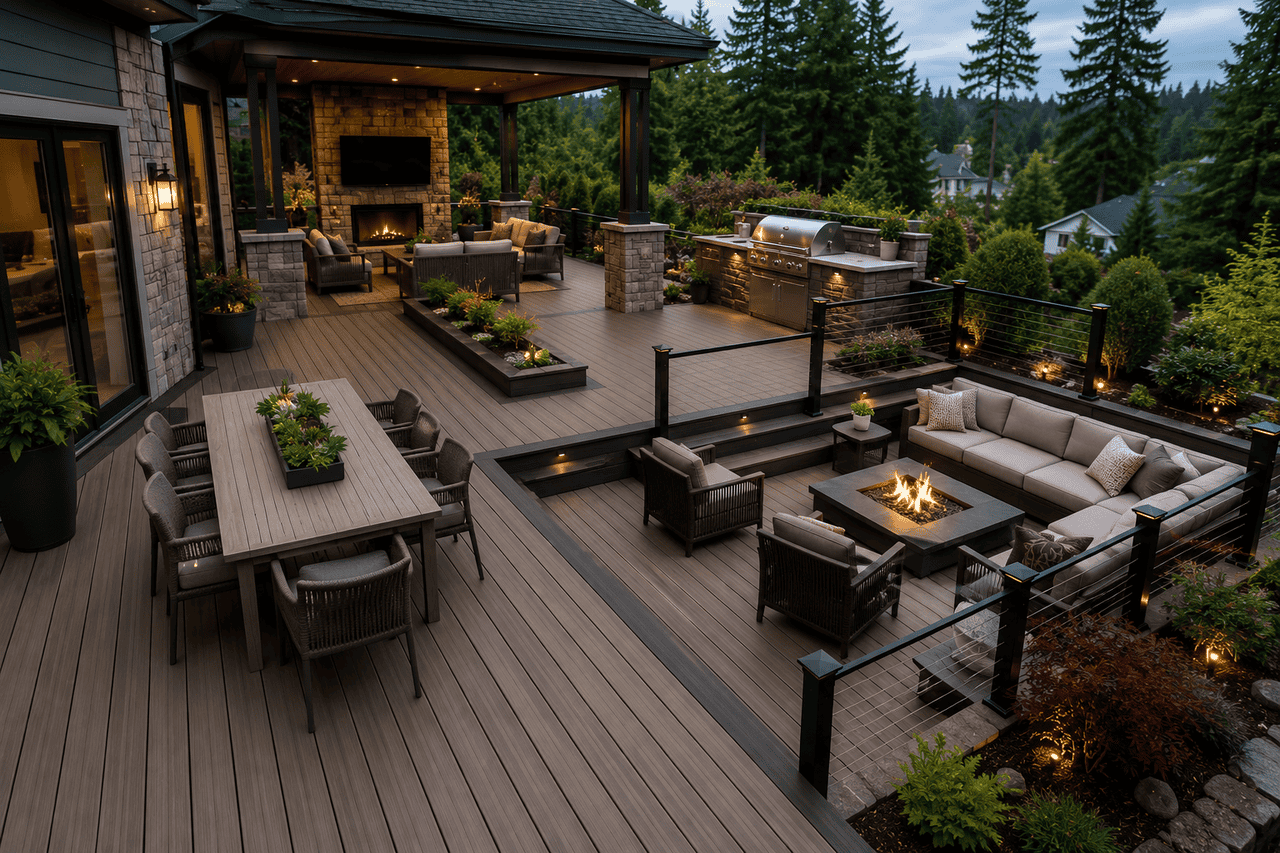
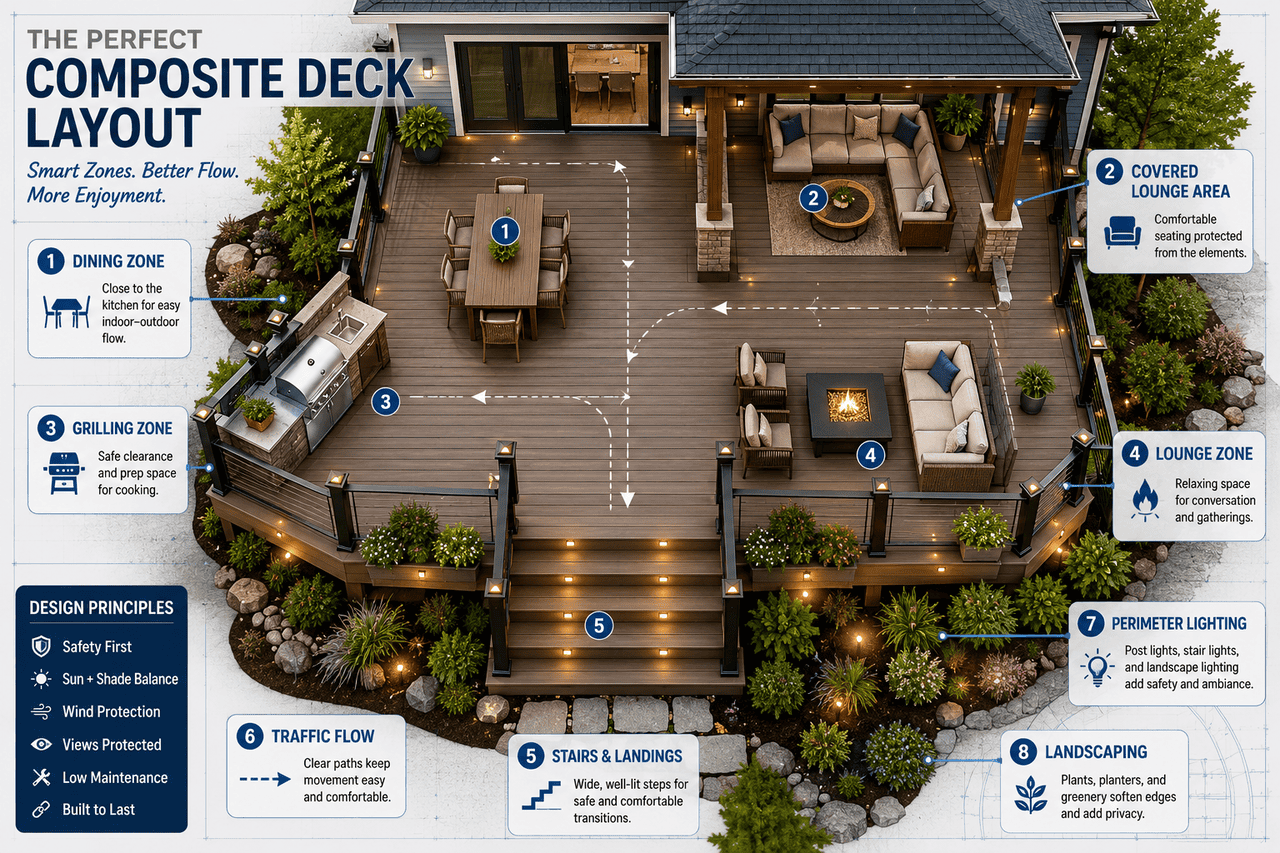
One of the most practical deck ideas is to think in zones. Instead of one open platform where everything competes for space, a zoned deck gives each activity a clear home.
A larger deck might include:
- A dining zone near the kitchen door
- A lounge zone with comfortable seating
- A grill station with safe clearance
- A stair landing that does not interrupt furniture placement
- A covered section for rainy days
- An open section for sun exposure
- A lower-level platform that connects to the yard
Even a smaller deck can benefit from this approach. A compact layout might use a built-in bench along one side, leaving the center open for a table or chairs. A corner can be reserved for planters, a small storage box, or a privacy screen.
The key is sequencing. People should be able to enter, move, sit, cook, and exit without awkward bottlenecks. Doors, stairs, railings, and furniture all need to work together.
Choose Materials With Washington Weather in Mind
In Washington, decks deal with moisture, shade, algae growth, temperature swings, and long stretches of damp weather. Material selection should account for both appearance and performance.
Popular decking options include natural wood, pressure-treated lumber, cedar, hardwood, PVC, and composite decking. Each has advantages, but the best choice depends on maintenance expectations, budget, style, and exposure.
Wood can be warm and classic, but it requires regular care. Composite and PVC decking are popular for homeowners who want less sanding, staining, and sealing. These materials can also provide strong resistance to moisture-related wear when installed properly.
When comparing decking materials, consider:
- Slip resistance
- Moisture resistance
- Maintenance requirements
- Color stability
- Heat retention in direct sun
- Fastener systems
- Board spacing and drainage
- Warranty terms
- Compatibility with railing and trim details
A planning-first contractor will help you understand not only how a material looks on day one, but how it is likely to perform after several wet winters.
Make the Railing Part of the Design
Railing is a safety feature, but it is also one of the most visible design elements on a deck. The right railing can make the deck feel open, modern, traditional, or highly polished.
Railing options may include:
- Wood railing for a classic look
- Composite railing for lower maintenance
- Aluminum railing for a clean, durable profile
- Cable railing for better views
- Glass panels for wind protection and visibility
- Mixed-material railing for a custom appearance
The best railing choice depends on the home’s architecture, the view, maintenance preferences, and budget. For example, cable railing can preserve sightlines, but it may not be the right fit for every setting or style. Glass can be beautiful where wind protection matters, but it needs cleaning to stay clear. Composite railing can pair well with composite decking for a cohesive, low-maintenance system.
A well-designed railing should feel intentional. It should match the deck’s purpose, meet code requirements, and look good up close.
Add Built-In Seating for Efficiency
Built-in seating is a smart way to make a deck more functional without overcrowding it with furniture. Benches can define edges, frame conversation areas, and provide overflow seating during gatherings.
Built-in seating works especially well for:
- Small decks where space is limited
- Fire table areas
- Dining zones
- Perimeter seating
- Garden-facing decks
- Multi-level decks
- Privacy screen combinations
From a planning perspective, built-ins should be designed carefully. Seat height, depth, back support, drainage, and material durability all matter. A bench that looks good but feels uncomfortable will not get much use. A bench that traps water or debris can become a maintenance issue.
For a cleaner result, built-ins should be integrated into the framing, decking layout, and railing plan rather than added as an afterthought.
Consider a Covered Deck for Year-Round Use
A covered deck can be a major lifestyle upgrade in the Pacific Northwest. It creates a more reliable outdoor area when the weather is damp, cool, or unpredictable.
Cover options may include:
- Roof extensions
- Gable covers
- Shed-style covers
- Pergolas with partial shade
- Waterproof deck covers
- Under-deck drainage systems for elevated decks
A full roof cover requires careful planning. The structure must tie into the home correctly, manage water properly, and look like it belongs. Roof pitch, flashing, gutters, posts, footings, and load paths all matter. This is where an engineer-focused mindset is especially valuable.
A covered deck should not feel like a bolt-on. It should feel like a natural extension of the home, both visually and structurally.
Improve Privacy Without Closing Everything In
Privacy can make a deck feel more comfortable, especially in neighborhoods where homes sit close together. The goal is to create shelter without making the space feel boxed in.
Privacy ideas include:
- Horizontal slat screens
- Lattice panels
- Tall planters
- Partial walls
- Pergola curtains
- Frosted glass panels
- Strategic railing height
- Trellis features with climbing plants
The best privacy solutions are targeted. You may only need screening on one side, near a dining area, or around a hot tub. Blocking every view can reduce light, airflow, and openness.
A thoughtful design identifies where privacy is actually needed, then solves that specific issue with the least intrusive method.
Use Lighting for Safety and Atmosphere
Deck lighting should be practical first, then beautiful. It helps prevent trips and makes the space usable after sunset.
Useful deck lighting locations include:
- Stair risers
- Post caps
- Railing sections
- Step edges
- Seating areas
- Grill zones
- Door transitions
- Pathways leading to the yard
Low-voltage lighting can create a warm, finished look without overwhelming the space. The key is placement. Too little light creates safety concerns. Too much light can feel harsh. A balanced lighting plan helps define edges, guide movement, and create a comfortable evening atmosphere.
Lighting should be discussed early because wiring routes, transformers, switches, and fixtures are easier to integrate before the deck is built.
Think Carefully About Stairs and Transitions
Stairs are one of the most important parts of a deck design. They affect safety, flow, yard access, and visual balance.
Poor stair placement can make a deck feel cramped or awkward. Well-placed stairs can make the deck feel connected to the landscape.
Planning questions include:
- Where do people naturally want to walk?
- Should stairs face the yard, driveway, patio, or garden?
- Is a wider stair run worth the added cost?
- Would a landing improve safety and appearance?
- Does the stair location interrupt furniture placement?
- Are lighting and handrails integrated properly?
For elevated decks, stairs also have a strong visual impact. The shape, width, railing, and landing details should be designed as part of the full structure, not treated as a leftover requirement.
Design Around Views, Sun, Shade, and Wind
A deck should respond to its site. That means looking at the view, sun path, shade patterns, wind exposure, neighboring homes, and existing landscaping.
A sunny deck might benefit from a pergola, umbrella sleeve, or covered section. A shaded deck might need moisture-conscious materials and good airflow. A windy deck might benefit from a glass railing or a partial wind screen. A deck with a beautiful view might use cable railing, glass panels, or a lower-profile railing system where allowed.
Site conditions should guide design choices. The most successful deck ideas are not copied from somewhere else. They are adapted to the home, yard, climate, and daily habits of the people who will use the space.
Plan for Long-Term Performance
A deck is an outdoor structure, so long-term performance matters. Attractive finishes are important, but hidden details often determine how well the deck holds up.
Important performance considerations include:
- Proper footings
- Code-compliant framing
- Correct joist spacing
- Strong ledger attachment
- Proper flashing
- Drainage planning
- Ventilation under the deck
- Corrosion-resistant fasteners
- Clean board spacing
- Safe stair geometry
- Railing stability
- Manufacturer-approved installation methods
In a wet climate, water management is critical. Flashing details, drainage gaps, and airflow can help reduce premature deterioration. The goal is not only to build something attractive, but to build something that continues to perform.
This is where craftsmanship should be visible both up close and underneath. Clean cuts, aligned fasteners, consistent spacing, stable railings, and thoughtful trim work all contribute to a deck that feels solid and well-built.
Match the Deck to the Home’s Architecture
A deck should look like it belongs to the house. That does not mean it has to copy every existing detail, but it should respect the home’s shape, materials, proportions, and style.
For a traditional home, warm colors, classic railing profiles, and balanced stair placement may work well. For a modern home, cleaner lines, metal railing, wide boards, and minimal trim may be a better fit. For a craftsman-style home, rich tones, substantial posts, and detailed trim can create a cohesive look.
Color matters too. Decking, railing, fascia, trim, siding, windows, roofing, and landscaping should all be considered together. A deck can either blend quietly into the home or become a strong design feature. Both approaches can work when planned intentionally.
Add Practical Features That Make Daily Use Easier
The best deck ideas often include small details that improve everyday convenience.
Consider adding:
- A dedicated grill area
- Built-in storage
- Planter boxes
- Outdoor outlets
- A hose bib nearby
- A gate for pets or children
- Integrated lighting controls
- A privacy screen near seating
- Space for a patio heater
- A waterproof storage bench
- A transition area for muddy shoes
These details may seem minor, but they can make the difference between a deck that looks nice and a deck that becomes part of daily life.
Avoid Common Deck Planning Mistakes
Many deck problems come from rushing the planning stage. A project that starts without a clear scope can lead to confusion, delays, change orders, and details that do not line up.
Common mistakes include:
- Choosing materials before confirming layout
- Underestimating furniture clearance
- Placing stairs in the wrong location
- Ignoring drainage
- Forgetting lighting and electrical needs
- Not planning for privacy
- Overbuilding in one area and underbuilding in another
- Treating railing as an afterthought
- Skipping structural evaluation on an older deck
- Choosing the cheapest option without considering long-term maintenance
A better process starts with a clear scope, clean sequencing, and careful review before construction begins. That way, everyone understands what is being built, why it is being built that way, and how each part of the project supports the final result.
FAQ
What is the best deck material for Washington homes?
Composite and PVC decking are popular because they offer lower maintenance and strong moisture resistance. Wood can still be a beautiful option, but it requires more upkeep. The best choice depends on budget, appearance, exposure, and how much maintenance you want to handle.
How big should my deck be?
Your deck should be sized around its intended use. A small seating area needs less space than a dining and grilling layout. Plan for furniture, walking paths, stairs, doors, and railings before finalizing dimensions.
Is a covered deck worth it?
For many Washington homeowners, yes. A covered deck can extend outdoor use through rainy seasons and make the space feel more like an outdoor room. It does require careful structural and water-management planning.
Can I add a hot tub to my deck?
Possibly, but it must be planned correctly. Hot tubs are very heavy when filled with water and people, so the deck structure needs to be designed or evaluated for that load.
How do I make my deck more private?
Use targeted privacy features such as slat screens, planters, lattice, glass, or partial walls. Focus on the areas where privacy matters most rather than enclosing the entire deck.
What deck features add the most everyday value?
Lighting, smart stair placement, comfortable seating, durable materials, weather protection, and a layout that connects smoothly to the home tend to provide strong day-to-day value.
Should I repair or replace my existing deck?
That depends on the condition of the framing, footings, ledger, decking, railing, and stairs. If structural components are compromised, replacement may be safer and more cost-effective than cosmetic repair.
Plan Your Deck With Evergreen Home Exteriors
The right deck can change the way you use your home, but the best results come from careful planning before construction starts. We are a Washington remodeling contractor focused on planning-first project delivery, including clear scope, clean sequencing, and craftsmanship that looks great up close and performs long-term. If you are ready to explore deck ideas that fit your home, your site, and your long-term goals, schedule your deck consultation today.