

Deck Railing Ideas
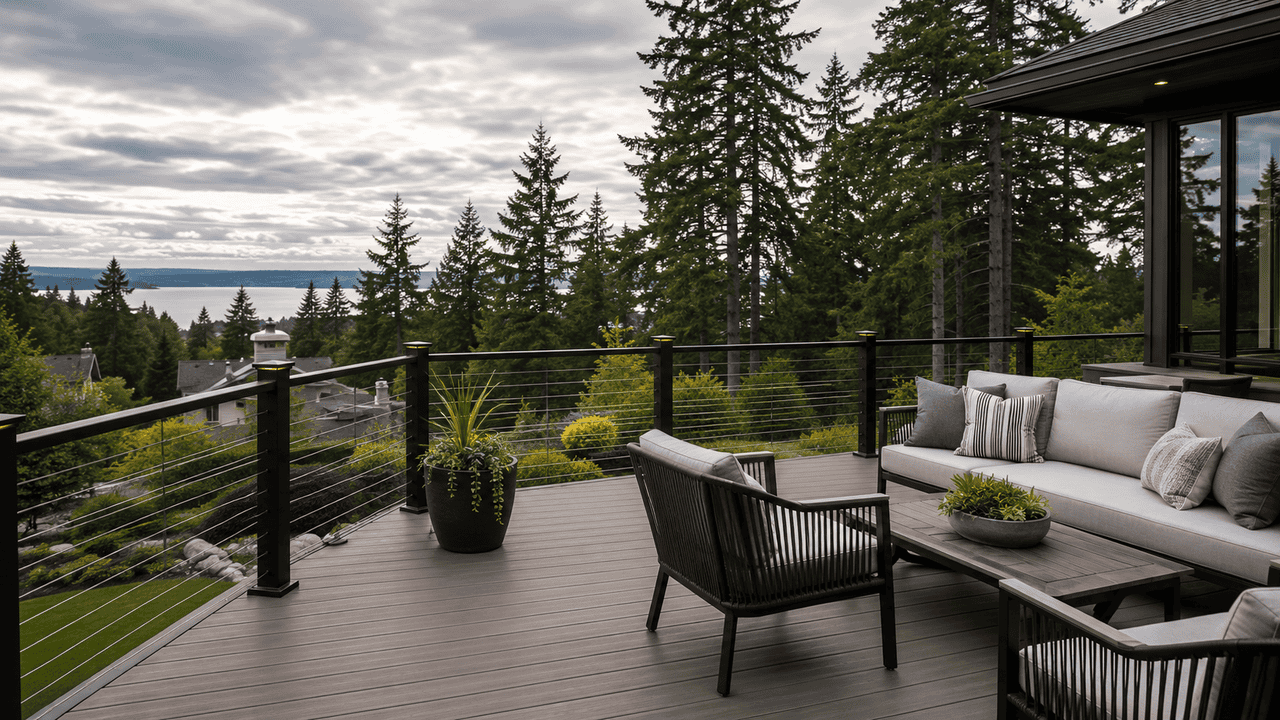
The best deck railing ideas do more than finish the edge of a deck. They define the view, improve safety, support the architecture of the home, and help the entire outdoor space feel intentional. For Washington homeowners, railings also need to stand up to moisture, seasonal temperature swings, wind exposure, and daily use. That means the right design is not only about style. It is about smart material selection, code-aware planning, clean installation, and long-term performance.
A well-designed deck railing should feel like it belongs. It should connect the deck to the house, frame the yard without blocking the best sightlines, and hold up beautifully over time. Whether you are updating an older deck, planning a full exterior remodel, or building a new outdoor living space from the ground up, your railing choice can make a major difference in how the deck looks, functions, and ages.
Below are practical, attractive, and engineer-focused deck railing ideas to help you plan a railing system that looks great up close and performs well for years.
Start With the Structure Before the Style
Before choosing a railing profile, color, or infill pattern, it is important to think about the structural requirements of the deck. Railings are safety systems first. They need to resist loads, stay securely fastened, and integrate properly with posts, framing, stairs, landings, and transitions.
A beautiful railing that is not properly supported can create long-term problems. Posts may loosen, fasteners may corrode, or sections may shift over time. That is why planning matters. The best railing projects begin with questions like:
- What is the deck height?
- Are stairs involved?
- What local code requirements apply?
- How much wind exposure does the deck receive?
- What is the condition of the existing framing?
- Will the railing attach to wood, composite, concrete, or another material?
- Are there view corridors that should remain open?
- How much maintenance is the homeowner comfortable with?
When these details are handled early, the finished railing feels cleaner, stronger, and more integrated. It also helps prevent awkward field adjustments during installation.
Classic Wood Railings for a Warm, Traditional Look
Wood railings remain a popular choice because they feel natural, familiar, and highly customizable. They work especially well with craftsman homes, cabins, traditional exteriors, and decks surrounded by trees or natural landscaping.
Wood can be shaped, painted, stained, or detailed in many ways. A simple top rail with square balusters creates a timeless look, while wider posts and custom caps can give the deck a more substantial architectural presence.
Popular wood railing options include:
- Pressure-treated wood for budget-conscious projects
- Cedar for natural beauty and resistance to decay
- Painted wood for a crisp, traditional exterior style
- Stained wood for warmth and visible grain
- Custom wood posts with decorative caps or trim
From an engineering perspective, wood railings require careful attention to fasteners, moisture control, and ongoing maintenance. In the Pacific Northwest, water management matters. End cuts, post bases, and horizontal surfaces should be detailed properly to reduce premature wear. Wood can be a beautiful choice, but it performs best when the design accounts for drainage, airflow, and future upkeep.
Cable Railings for Open Views
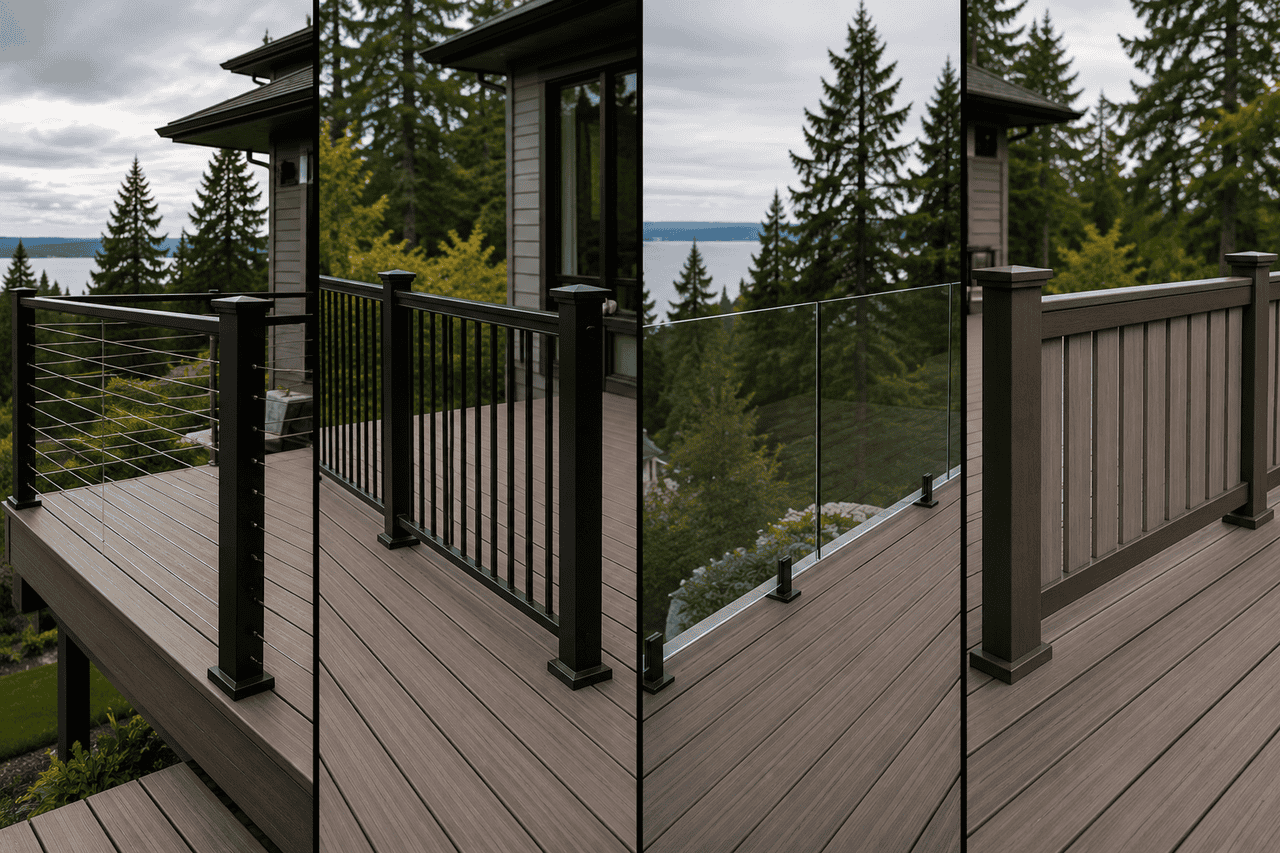
Cable railings are a strong option for homeowners who want safety without visually closing off the deck. They use horizontal stainless steel cables between posts, creating a clean, modern look that preserves views of water, trees, mountains, gardens, or open yards.
This style is especially effective on elevated decks or homes with scenic surroundings. The thin cable lines create less visual interruption than traditional balusters, making the deck feel more open.
Cable railing benefits include:
- Excellent visibility
- Modern, minimal appearance
- Durable stainless steel components
- Strong compatibility with wood, metal, or composite posts
- Good airflow through the railing system
The planning details are important. Cable railings require proper tensioning, post spacing, and corner design. Because cables exert force on the posts, the post structure must be built to resist that load. If the posts are undersized or poorly anchored, the cables can pull them out of alignment over time. A planning-first contractor will review the framing, spacing, and hardware before installation so the finished system stays straight, tight, and attractive.
Glass Railings for a Clean, View-Focused Deck
Glass railings are ideal when the goal is to preserve the view while creating a polished, high-end appearance. They are common on waterfront homes, modern homes, and elevated decks where the scenery is a major part of the outdoor experience.
Glass railing panels can be framed, semi-frameless, or nearly frameless, depending on the system. They create a quiet visual edge around the deck and can also help block wind in exposed areas.
Advantages of glass railings include:
- Clear, uninterrupted views
- Sleek contemporary style
- Wind protection
- Strong visual connection to the landscape
- A premium finished appearance
However, glass requires thoughtful planning. Panels need proper support, drainage, and spacing. Homeowners should also consider cleaning requirements, especially in areas with rain, pollen, salt air, or tree debris. Glass can be a stunning choice, but it works best when installed with a system designed for the deck’s exposure and use.
Aluminum Railings for Low Maintenance
Aluminum railings offer a smart balance of durability, clean design, and low maintenance. They are resistant to rust, relatively lightweight, and available in many colors and profiles. For homeowners who want a finished look without frequent staining or painting, aluminum can be an excellent choice.
Black aluminum railings are especially popular because they visually recede into the background. This makes them a good option when you want the railing to feel neat and defined without dominating the view.
Aluminum railing benefits include:
- Low maintenance
- Durable powder-coated finishes
- Strong resistance to corrosion
- Clean lines and consistent profiles
- Compatibility with many deck styles
- Good performance in wet climates
From a technical standpoint, aluminum systems are often engineered as complete railing packages. This can make installation more predictable, provided the deck structure is properly prepared. Posts, brackets, stair sections, and transitions should be coordinated before work begins to avoid layout conflicts.
Composite Railings for a Coordinated Exterior
Composite railings pair well with composite decking and other low-maintenance exterior materials. They can mimic the look of painted wood while offering better resistance to rot, splitting, and insect damage. For homeowners who want a clean, finished appearance with less upkeep, composite is worth considering.
Composite railing systems often include matching post sleeves, caps, top rails, and balusters. This gives the deck a cohesive look and simplifies material coordination.
Composite railings are a good fit for:
- Decks with composite deck boards
- Homes with painted trim or modern siding
- Homeowners who prefer low-maintenance materials
- Projects where color coordination matters
- Families looking for a durable everyday railing system
The key is choosing a railing system that fits the proportions of the deck and home. Some composite railings have a bulkier profile than metal systems, which can be attractive on larger decks but may feel heavy on smaller spaces. Proper layout helps keep the finished design balanced.
Mixed-Material Railings for Custom Character
Mixed-material railings combine two or more materials to create a customized look. For example, a deck might use wood posts with cable infill, composite sleeves with aluminum balusters, or metal posts with a wood top rail.
This approach works well when homeowners want the warmth of one material and the performance of another. It can also help connect the deck to other exterior elements, such as siding, windows, trim, fences, or landscape features.
Popular mixed-material combinations include:
- Wood posts with stainless steel cable
- Aluminum posts with composite top rails
- Composite posts with black metal balusters
- Wood rail caps with metal infill
- Stone or masonry columns with metal rail sections
The most important consideration is compatibility. Different materials expand, contract, drain, and age differently. Fasteners, brackets, and connection points should be selected carefully so the system works as a whole. A mixed-material railing can look beautiful, but the details need to be coordinated before installation begins.
Horizontal Railings for a Modern Profile
Horizontal railings create a clean, linear look that works well with modern, transitional, and mid-century inspired homes. Instead of vertical balusters, the infill runs horizontally across the railing sections. This can visually widen the deck and emphasize long sightlines.
Horizontal railing options may include:
- Cable
- Metal rods
- Wood boards
- Composite rails
- Custom steel or aluminum profiles
This style can look sharp, but local code requirements and safety considerations should be reviewed during planning. Openings, spacing, climbability, and load requirements can affect what is allowed or recommended. The right contractor will help balance the design intent with safety and compliance.
Vertical Balusters for a Timeless, Code-Friendly Design
Vertical balusters are one of the most common railing choices because they are practical, familiar, and versatile. They work with wood, metal, composite, and vinyl railing systems. They are also generally straightforward to design around code spacing requirements.
A vertical baluster railing does not have to look basic. The style can change dramatically depending on material, spacing, post size, rail profile, and color. For example, black aluminum balusters between wood rails can create a classic Pacific Northwest look, while white composite balusters can feel bright and traditional.
Vertical balusters are a good choice when you want:
- A timeless design
- Reliable safety
- Simple maintenance
- Broad material options
- A style that works with many home types
For many homeowners, this is the best balance of cost, appearance, and long-term performance.
Black Railings for a Framed View
Black railings continue to be popular because they create contrast while staying visually quiet. The eye tends to look past dark railing lines toward the landscape, which makes black a strong choice for decks with views.
Black works especially well with:
- Modern homes
- White or light-colored siding
- Natural wood decking
- Composite decking
- Forested or landscaped backyards
- Large windows and glass doors
Black aluminum, steel, cable systems, and composite railings can all create a clean, architectural look. The result is a deck edge that feels intentional without overwhelming the space.
White Railings for a Bright, Traditional Feel
White railings create a crisp, clean appearance that pairs well with classic homes, coastal styles, farmhouse exteriors, and traditional siding colors. They make the deck feel bright and finished, especially when paired with white trim or columns.
White railing systems are often made from vinyl, composite, or painted wood. The main consideration is maintenance. White surfaces can show dirt, pollen, mildew, and debris more easily, especially in damp climates. Choosing durable materials and planning for routine cleaning will help keep the railing looking fresh.
Built-In Lighting for Safety and Ambiance
Railing lighting is one of the most practical upgrades for a deck. It improves visibility, adds evening ambiance, and helps define stairs, posts, and edges. Lighting can be subtle, functional, or decorative depending on the design.
Deck railing lighting options include:
- Post cap lights
- Under-rail LED strips
- Stair riser lights
- Recessed post lights
- Low-voltage accent lights
- Solar lights for simpler installations
From a planning perspective, lighting should be considered early. Wiring, transformer locations, switch placement, and waterproofing details are easier to handle before the railing is installed. Clean sequencing prevents visible wires, awkward drilling, and unnecessary rework.
Wide Top Rails for Function and Comfort
A wide top rail can turn a railing into a useful surface. It can hold a drink, a small planter, a serving tray, or a decorative item. This is especially helpful for decks used for entertaining.
Wood and composite top rails are often good candidates for this style. The design should still maintain proper height, strength, and connection details. If the railing will be used frequently, the top rail should feel solid and comfortable to the touch.
A wide top rail can be especially useful for:
- Outdoor dining areas
- Grilling zones
- Small decks with limited table space
- Entertaining areas
- Decks overlooking a yard or view
This small detail can make the deck feel more livable.
Privacy Railings and Partial Screens
Not every deck railing is about maximizing the view. Some decks need privacy from neighbors, streets, or nearby properties. In those cases, a partial privacy screen can make the outdoor space feel more comfortable.
Privacy-focused railing ideas include:
- Taller screen sections where allowed
- Frosted glass panels
- Horizontal wood slats
- Composite privacy panels
- Lattice accents
- Planter-integrated screens
The best privacy designs are targeted. Instead of enclosing the entire deck, consider screening only the areas that need it. This preserves openness while improving comfort where it matters most.
Railing Ideas for Stairs
Stair railings need special attention because they involve slope, transitions, graspability, and safe movement. A stair railing should feel sturdy, smooth, and easy to use.
Good stair railing planning includes:
- Consistent handrail height
- Secure post placement
- Clean transitions at landings
- Proper baluster spacing
- Durable hardware
- Slip-conscious stair design
- Lighting where needed
Stairs are one area where craftsmanship is especially visible. Uneven cuts, awkward brackets, and misaligned rails stand out quickly. Clean sequencing and careful layout make a major difference.
Match the Railing to the Home’s Architecture
The best railing is not always the trendiest option. It is the one that fits the home. A sleek glass or cable railing may look excellent on a modern home, while a detailed wood or composite railing may better suit a traditional exterior.
Consider these pairings:
- Craftsman homes: wood or composite railings with substantial posts
- Modern homes: cable, glass, or black aluminum railings
- Farmhouse styles: white composite or painted wood railings
- Northwest contemporary homes: natural wood with metal or cable infill
- Waterfront homes: glass or cable railings to preserve views
- Traditional homes: vertical balusters with classic rail profiles
A thoughtful railing choice should look like it was part of the original design, not an afterthought.
Think About Maintenance From the Beginning
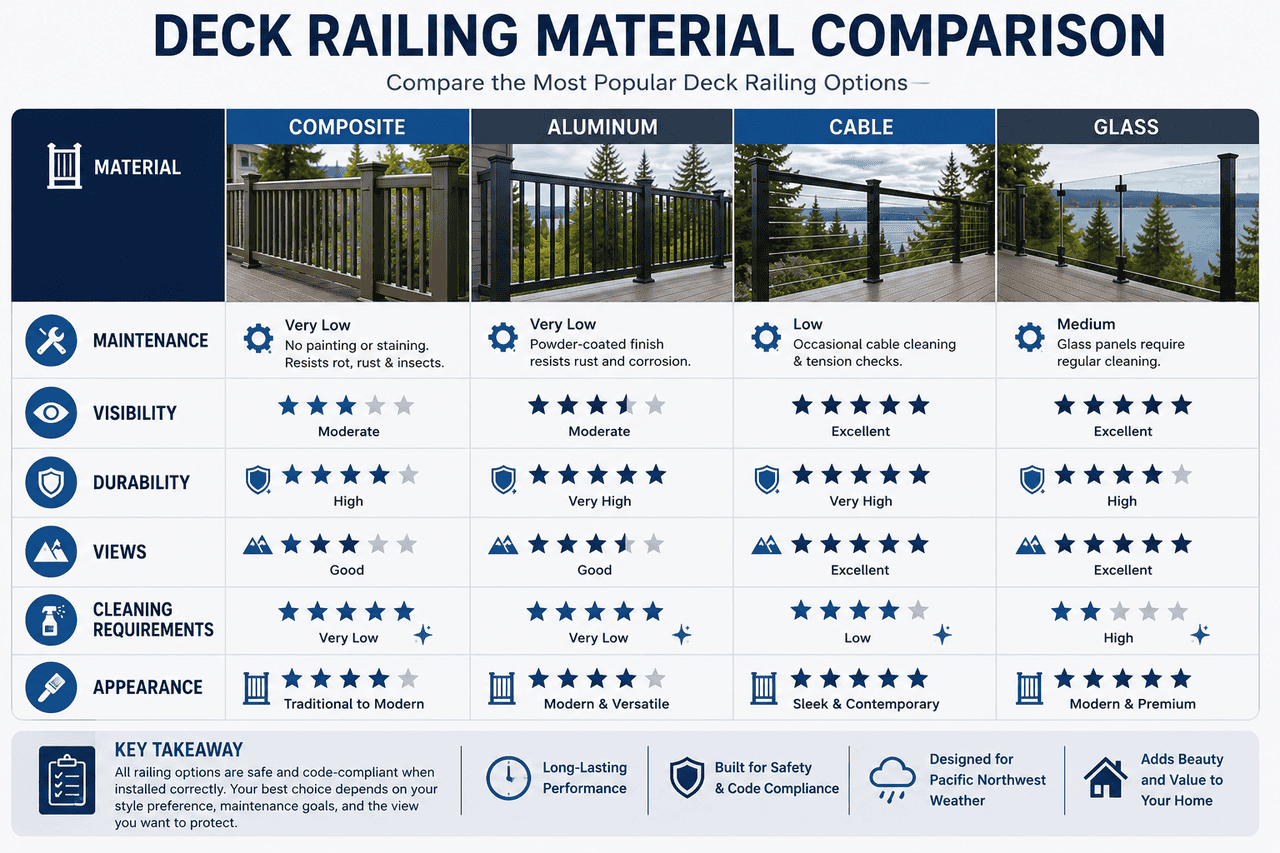
Every railing material has a maintenance profile. Some need periodic staining or painting. Others need occasional cleaning and hardware checks. Understanding this upfront helps homeowners make better decisions.
General maintenance considerations include:
- Wood may need staining, sealing, or painting
- Glass needs regular cleaning to stay clear
- Cable systems may need tension adjustments
- Aluminum and composite need periodic washing
- Fasteners should be checked for corrosion or loosening
- Drainage paths should stay clear of debris
A good railing choice should match both the home’s design and the homeowner’s maintenance expectations.
Plan for Long-Term Performance
Deck railings are exposed to sun, rain, moisture, movement, and regular use. Long-term performance depends on more than the visible railing pieces. It depends on the full assembly.
Important performance details include:
- Proper flashing where railings meet the home
- Corrosion-resistant fasteners
- Strong post anchoring
- Correct spacing and layout
- Clean drainage details
- Compatible materials
- Accurate stair geometry
- Solid framing beneath the surface
When these details are planned before construction begins, the finished deck feels better and lasts longer.
FAQ
What is the most popular deck railing style?
Black aluminum railings, cable railings, and composite railings are all popular because they offer a clean style and lower maintenance. The best choice depends on your home’s architecture, view, budget, and maintenance preferences.
What railing is best for preserving a view?
Cable and glass railings are usually the best options for preserving a view. Cable creates a minimal line pattern, while glass provides the most open visual field.
Are wood deck railings still a good option?
Yes. Wood railings are still a great choice for homeowners who want warmth, character, and customization. They do require more maintenance than aluminum, composite, or glass systems.
What is the lowest-maintenance deck railing?
Aluminum and composite railings are among the lowest-maintenance options. They typically need routine cleaning but do not require regular staining or painting.
Can I mix railing materials?
Yes. Mixed-material railings can look excellent when planned properly. Common combinations include wood with cable, composite with aluminum balusters, and metal posts with wood top rails.
How do I choose the right railing color?
Look at your siding, trim, windows, deck boards, and landscape. Black often disappears into the view, white feels crisp and traditional, and natural wood adds warmth.
Should railing lighting be added during installation?
Yes. Lighting is easier and cleaner to install when it is planned before or during the railing project. This helps hide wiring and coordinate power, controls, and waterproofing.
Do deck railings need to meet code?
Yes. Deck railings must meet applicable safety and building requirements. Height, spacing, load resistance, stair details, and guardrail requirements can all matter.
How long do deck railings last?
It depends on the material, exposure, installation quality, and maintenance. Aluminum and composite systems can last many years with basic care, while wood requires more ongoing upkeep.
What should I consider before replacing deck railings?
Start by checking the deck structure. The framing, posts, stairs, and attachment points should be evaluated before new railings are installed. A strong railing needs a strong foundation.
Bring Your Deck Railing Ideas to Life With Evergreen Home Exteriors
A great deck railing should look beautiful, feel secure, and perform through years of Washington weather. At Evergreen Home Exteriors, we approach remodeling with a planning-first process built around a clear scope, clean sequencing, and craftsmanship that looks great up close and performs long-term. Whether you are comparing deck railing ideas, updating an aging exterior, or planning a larger outdoor living upgrade, our team can help you make confident decisions from the first conversation through the final walkthrough. Schedule your FREE consultation today.