

Kitchen Remodel Trends in 2026: What’s In and What’s Out
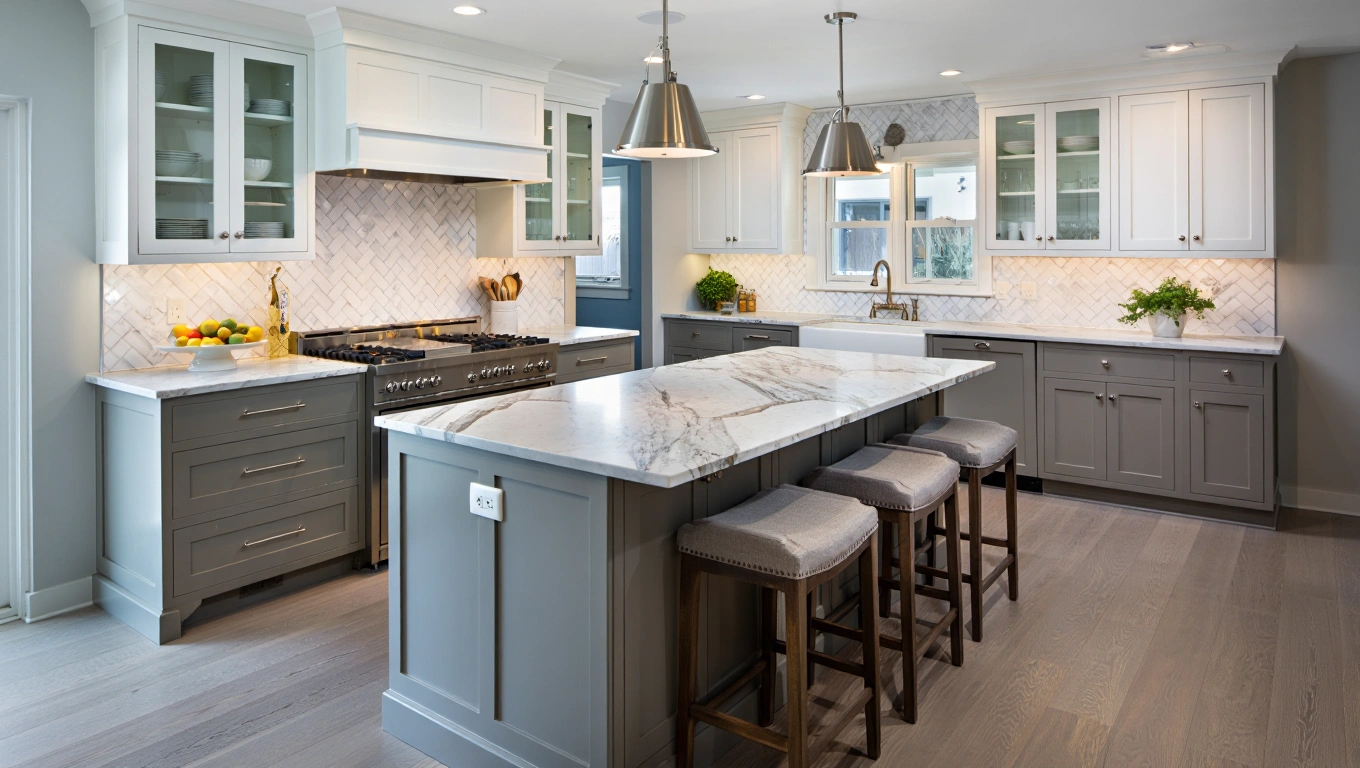
If you are planning a remodel this year, understanding the latest kitchen remodel trends in 2026 can help you make informed, long-term decisions instead of chasing short-lived fads. Kitchens are no longer just places to cook. They are performance-driven workspaces, gathering hubs, and high-value investments in your home. In Washington, where moisture control, energy efficiency, and durability matter just as much as aesthetics, smart design choices can make the difference between a kitchen that looks good on reveal day and one that performs beautifully for decades.
Below, we break down what is in, what is out, and why these shifts are happening. From materials and layouts to lighting and ventilation, the 2026 kitchen is all about thoughtful engineering paired with refined style.
In: Planning-First Design That Starts with Function
In 2026, homeowners are prioritizing intentional planning over impulse design. Instead of picking finishes first, successful remodels begin with layout optimization, workflow mapping, and performance considerations.
A planning-first approach includes:
- Evaluating traffic flow between cooking, prep, cleaning, and storage zones
- Analyzing natural light and ventilation
- Identifying structural limitations before finalizing cabinet plans
- Mapping electrical and plumbing upgrades early
- Aligning scope, schedule, and sequencing before construction begins
This shift reflects a growing awareness that great kitchens are built on engineering logic. When the scope is clearly defined and trades are sequenced properly, the end result is cleaner, more durable, and less prone to costly change orders.
Out: Design by Social Media Screenshot
Quick trend-driven remodels based solely on inspiration photos are fading out. While inspiration is valuable, copying a design without considering structural realities, code requirements, or climate conditions often leads to performance problems.
Common issues with trend-only remodels include:
- Inadequate ventilation for high output ranges
- Overloaded circuits from added appliances
- Poor cabinet anchoring due to unknown wall conditions
- Materials not rated for Pacific Northwest humidity
In 2026, homeowners want kitchens that function flawlessly, not just look good in a filtered photo.
In: Warm Minimalism with Depth
The all-white, ultra-sterile kitchen has officially softened. Warm minimalism is leading the way. Clean lines remain popular, but the color palette has evolved to include depth and warmth.
Trending tones include:
- Warm whites and creamy neutrals
- Soft clay and muted earth tones
- Natural wood finishes with visible grain
- Deep greens and charcoal accents
Flat slab cabinets are still present, but more homeowners are mixing materials to create visual contrast. Wood islands paired with painted perimeter cabinets are common. The focus is on balance, not monotony.
Out: Stark White Everything
Bright white cabinets, white quartz counters, white backsplash, and white floors are on the decline. While white still has its place, the all-white aesthetic can feel cold and overly reflective, especially during Washington’s darker winter months.
Additionally, lighter surfaces show wear, staining, and scuffs more visibly over time. Homeowners are recognizing that mid-tone materials often age more gracefully and hide daily use better.
In: Performance Driven Materials
Durability is a major theme in kitchen remodel trends in 2026. Homeowners are asking better questions about how materials perform under heat, moisture, and daily impact.
Popular high-performance choices include:
- Quartz and porcelain slab countertops with high heat resistance
- Engineered hardwood or luxury vinyl plank flooring with waterproof cores
- Cabinet boxes made from plywood rather than particleboard
- Full extension soft close hardware rated for heavy loads
Porcelain slabs are particularly gaining traction because they resist scratching, staining, and UV fading. For busy households, that level of resilience matters.
Out: Cheap Cabinet Construction
Low-grade particleboard cabinets with thin veneers are losing favor. While they may reduce upfront cost, they often swell with moisture exposure or sag under heavy dish loads.
In a climate like Washington’s, moisture resistance and structural integrity are non-negotiable. Quality cabinet boxes, proper anchoring into framing, and durable finishes ensure longevity and reduce long-term maintenance costs.
In: Smart Storage Engineering
Storage in 2026 is less about cramming in more cabinets and more about optimizing access and ergonomics.
Smart storage features include:
- Deep drawer bases instead of lower cabinets with shelves
- Vertical tray dividers for baking sheets
- Pull out pantry systems with metal-framed slides
- Toe kick drawers for rarely used items
- Appliance garages to reduce counter clutter
These solutions reduce bending and reaching, improve workflow, and keep countertops clear. From an engineering perspective, they distribute weight more effectively and improve usability over time.
Out: Dead Corners and Wasted Space
Blind corner cabinets and awkward lazy Susans are becoming less common. Designers are instead reconfiguring layouts to eliminate inaccessible voids altogether. In many cases, slightly shifting appliance placement creates more usable, linear storage.
In 2026, space efficiency is intentional, not accidental.
In: Layered Lighting Systems
Lighting is being treated as a technical system rather than a decorative afterthought. Kitchens now incorporate layered lighting to support task performance and ambiance.
A well-designed lighting plan typically includes:
- Recessed ceiling lights for general illumination
- Under-cabinet lighting for task clarity
- Pendant lighting over islands
- Toe kick or interior cabinet lighting for a subtle accent
LED technology has improved significantly, allowing homeowners to adjust color temperature based on time of day. Cooler tones support focus during food prep, while warmer tones create a relaxed evening environment.
Out: Single Fixture Center Lighting
One central ceiling fixture no longer meets modern kitchen demands. It creates shadows, reduces task visibility, and limits flexibility. Proper lighting placement is essential for both safety and aesthetics.
In: High Performance Ventilation
With the popularity of professional-style ranges and induction cooktops, ventilation has become a major consideration. In 2026, effective range hoods are prioritized for both air quality and moisture control.
Key ventilation trends include:
- Externally vented hoods rather than recirculating models
- Higher CFM ratings for powerful ranges
- Integrated make-up air systems where required by code
- Custom wood hood surrounds that conceal industrial strength inserts
In the Pacific Northwest, controlling humidity and cooking byproducts protects cabinetry and finishes from long-term damage.
Out: Recirculating Microwave Vents
Microwave vent combos that simply filter and push air back into the room are falling out of favor. They do little to remove moisture or cooking pollutants. Homeowners are increasingly aware that proper ducting is worth the investment.
In: Induction Cooking
Induction cooktops are one of the most practical technology shifts in kitchen remodel trends in 2026. They offer:
- Faster heat response
- Precise temperature control
- Energy efficiency
- Safer surfaces that cool quickly
For households with children, induction provides peace of mind. From an engineering standpoint, it reduces ambient heat load and can simplify ventilation requirements.
Out: Oversized Gas Ranges for Every Kitchen
While gas cooking still has loyal fans, not every kitchen requires a massive six-burner range. Many homeowners are realizing that oversized appliances can dominate space and complicate ventilation needs without adding meaningful benefits.
Appliance sizing is becoming more proportional to actual cooking habits.
In: Integrated and Panel Ready Appliances
Clean sight lines are driving the popularity of panel-ready refrigerators and dishwashers. Concealing appliances behind cabinet fronts creates a cohesive appearance and reduces visual clutter.
This design direction pairs well with warm minimalism and allows architectural details to stand out.
Out: Appliance Mismatch
Mixed stainless finishes and inconsistent appliance styles are being replaced by coordinated systems. Uniformity improves visual flow and increases perceived quality.
In: Sustainable and Energy Efficient Upgrades
Homeowners in Washington are especially conscious of sustainability. In 2026, remodels frequently incorporate:
- Energy-efficient appliances
- LED lighting throughout
- FSC certified wood products
- Low VOC finishes
- Improved insulation in exterior kitchen walls
Sustainability is not only environmentally responsible but also financially strategic. Lower utility costs and improved indoor air quality deliver measurable returns.
Out: Short-Term Thinking
Quick cosmetic updates without addressing underlying inefficiencies are declining. Homeowners are thinking in terms of lifecycle performance rather than immediate resale staging.
In: Mixed Metal Finishes with Restraint
Brushed brass, matte black, and warm nickel are popular hardware choices. However, the trend is toward intentional mixing rather than random combinations.
Best practices include:
- Limiting metals to two complementary finishes
- Repeating each finish at least twice for visual cohesion
- Selecting finishes that resist corrosion in humid conditions
Quality hardware feels solid in hand and stands up to daily use.
Out: Overly Ornate Fixtures
Highly decorative faucets and intricate cabinet hardware are being replaced by streamlined forms. Simplicity supports long-term appeal and easier cleaning.
Bringing It All Together with a Planning-First Remodel
The common thread across all kitchen remodel trends in 2026 is intentionality. Homeowners want kitchens that are:
- Structurally sound
- Moisture resilient
- Energy efficient
- Ergonomically designed
- Visually timeless
Achieving that outcome requires more than selecting finishes. It requires careful scope definition, clean sequencing of trades, and craftsmanship that holds up under close inspection.
In Washington, where seasonal moisture, temperature swings, and code requirements shape building decisions, experience matters. A well-executed kitchen remodel is a coordinated system of framing, electrical, plumbing, ventilation, cabinetry, and finish work working together seamlessly.
Ready to Plan Your 2026 Kitchen Remodel?
If you are considering a remodel, the smartest move you can make is starting with a team that prioritizes clarity and craftsmanship from day one. Evergreen Home Exteriors is a Washington remodeling contractor known for planning-first project delivery, clear scope definition, clean sequencing, and results that look exceptional up close and perform long-term.
Whether you are reconfiguring your layout, upgrading materials, or building your dream kitchen from the studs out, our process is designed to eliminate surprises and maximize value.
Schedule your FREE, no-pressure consultation with us today and take the first step toward a kitchen that is engineered to perform beautifully for years to come.
Frequently Asked Questions
What kitchen design trends are popular in 2026?
Popular trends include warm natural tones, smart appliances, mixed materials, and minimalist cabinetry with functional layouts.
Are open-concept kitchens still in style?
Yes, but with more defined zones for cooking, dining, and entertaining rather than completely open layouts.
What materials are trending for countertops?
Quartz remains a top choice for durability, while natural stone and recycled materials are gaining popularity for their sustainability and unique look.
How much does a kitchen remodel typically cost?
Costs vary widely based on size and finishes, but most kitchen remodels range from moderate updates to full-scale renovations depending on scope.
What upgrades provide the best return on investment?
Upgrades like modern cabinetry, energy-efficient appliances, and updated lighting typically offer the best ROI.